Tuesday, 9 April 2024

The Selected Letters of Ralph Ellison

The cover of The Selected Letters of Ralph Ellison (The Modern Library)


A new blog entry is long overdue and since I'm reading The Selected Letters of Ralph Ellison with my morning coffee these days, I can use this book cover entry to recommend it. Highly! The book was on my wish list for years because I wanted to wait for the paperback edition, published recently by The Modern Library (the hardcover came out about four years ago). The wait was worth it. Ellison knows the art of letter writing and learning his story through his many letters is fascinating. I have yet to read Invisible Man (1952) and Juneteenth (1999, published posthumously) but both are on my list.

The letters are organised by decade with an introduction by editor John F. Callahan for each. I recommend reading the letters first, to allow Ellison to tell his story and his voice to shine. Sometimes there are too many quotes from the letters and interpretations that spoil the 'plot'. Yes, you can talk about a plot in this context because Ellison often writes long letters with plenty of content. The first ones are written in the 1930s, mainly to his mother when he was an impoverished student in Alabama.

He then moves to New York, settling in Harlem later, and it feels as if the book takes off with a letter to the poet Langston Hughes at the beginning of 1939 when Ellison has turned to writing ('There is really little that I can tell you Lang. I spend all of my time trying to make a writer of myself ...'). There are many letters to the writer Richard Wright (his book Native Son was published in 1940) in the 1940s that show Ellison mastering the craft ('You told me I would begin to write when I matured emotionally, when I began to feel what I understood. I am beginning to understand what you meant'). This collection of letters can best be described as a good novel that is hard to put down.

Cover design: Rachel Ake
Cover photo: James Whitmore/The LIFE


The Selected Letters of Ralph Ellison
Edited by John F. Callahan and Marc C. Conner
Paperback, 1072 pages
ISBN: 9780593730072
The Modern Library


Tulips on my coffee table, Easter 2024 · Lisa Stefan
My literary Easter mood/Instagram


Monday, 3 July 2023

No One Prayed Over Their Graves · Khaled Khalifa

The cover of No One Prayed Over Their Graves by Khaled Khalifa (FSG)


This July, FSG is publishing an English translation of the novel No One Prayed Over Their Graves by the Syrian writer Khaled Khalifa. Its setting is a Syrian village near Aleppo destroyed by a flood that transforms the lives of two friends. The translator is Leri Price, who also translated Death Is Hard Work, a 2019 National Book Awards finalist.

One of my weaknesses is beautiful book covers, hence this blog category, and more than once have I been fooled. I have yet to learn my lesson and hardly ever will. Is there a better combination than a good book and a good cover? I have never read this one and cannot judge its content, but the photo caught my attention, as did the title design. I have never travelled to Syria or the Middle East, but there is something about the skylines of Middle Eastern cities, the mosques and the minarets that characterise them. This is likely the city of Aleppo, as it used to be. Khalifa was born in its vicinity but now lives in Damascus. His books are banned in his homeland. He was interviewed in The Guardian this weekend.

No One Prayed Over Their Graves
By Khaled Khalifa
Hardcover, 416 pages
ISBN: 9780374601935
FSG


Saturday, 6 May 2023

The Writing School · Miranda France

The cover of The Writing School by Miranda France (Corsair)


Yesterday I listened to the latest episode of the TLS podcast and one of the guests was Miranda France, talking about her new book, The Writing School, published this week by Corsair. I have never read anything by her but was intrigued and added the book to my wish list after reading these lines in the publisher's synopsis: 'A delightful and unusual blend of storytelling and memoir, ... The Writing School is a moving and often very funny book about why people write, as well as being a uniquely generous masterclass on the art of writing itself.'

The Writing School
By Miranda France
Hardcover, 224 pages
ISBN: 9781472157348
Corsair


Monday, 9 January 2023

№ 34 reading list: Annie Ernaux

On my № 34 reading list, A Man's Place by Annie Ernaux · Lisa Stefan


Happy New Year! I decided to start the blog year with a new reading list which will also be the final one in this format. I'm thinking about giving the lists a break or turning them into round-ups where I recommend some of the books that I have read. Part of me will miss this format because it disciplines me to know what I will be reading a few weeks ahead. At the same time, it takes away the spontaneity when I get a new book that I want to start reading right away, but feel as if I first have to finish the books on my current reading list - a luxury problem, I know. Another reason for the change is that I would like to read more in German to get a better grasp of the language.

№ 34 reading list:

1  A Man's Place  · Annie Ernaux
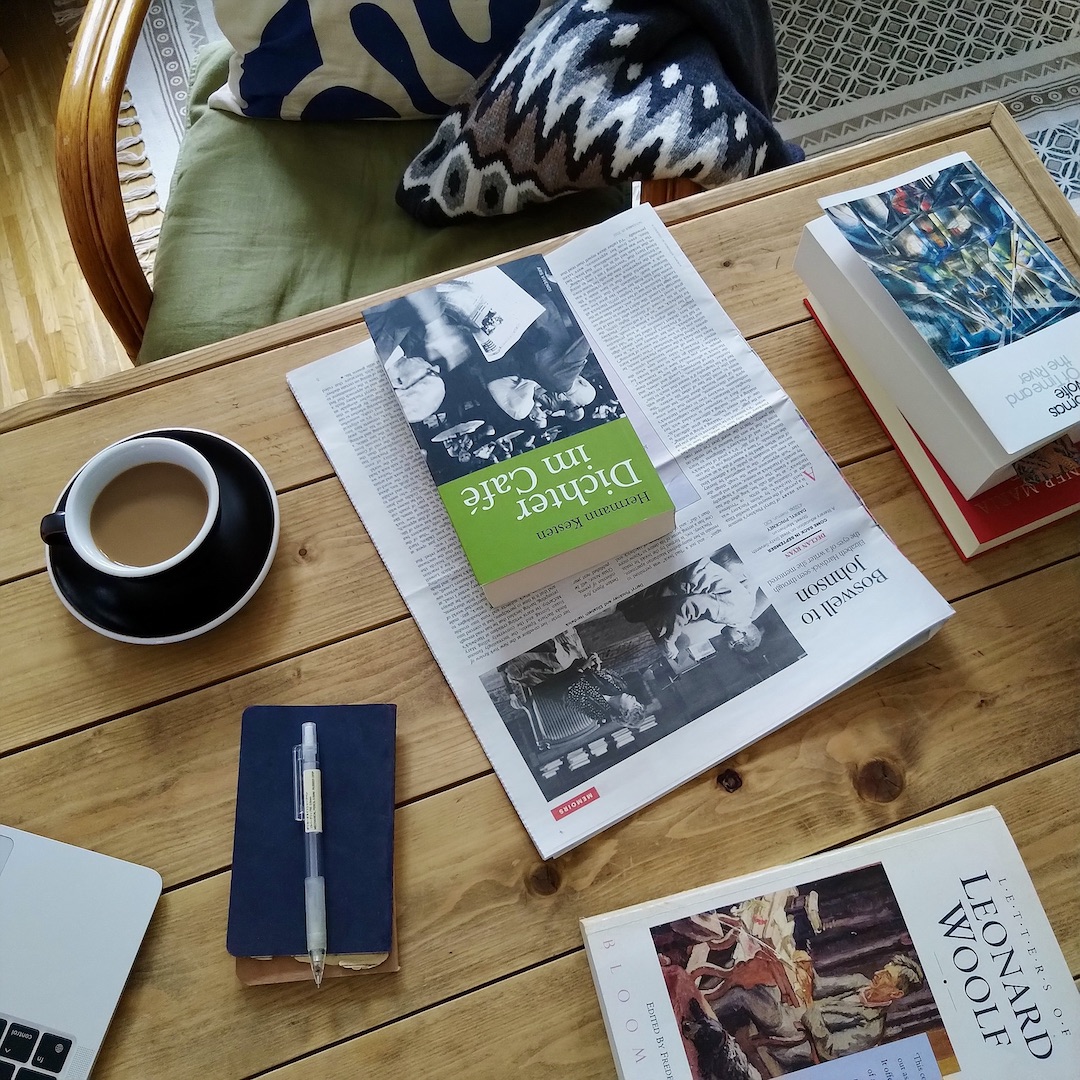
2  Of Time and the River  · Thomas Wolfe
3  Letters of Leonard Woolf  · edited by Frederic Spotts
4  Útsýni  · Guðrún Eva Mínervudóttir [Icelandic]
5  Dichter im Café  · Hermann Kesten [German]

Translated by: 1) A Man's Place: Tanya Leslie

Last year the French writer Annie Ernaux received the Nobel Prize in Literature. Her book on the list, La Place in French, is about her relationship with her barely educated father and the gap that gradually forms between them as her education takes her onto the pathway to the middle class. A recurrent theme throughout the narrative is the importance he attributed to language: she describes an incident where he needs to sign some documents in the presence of a notary. The shame he experiences when he realises that the has misspelt a short phrase is way out of proportion. In this compact book of only 100 pages, Ernaux sometimes pauses to tell us a few words about the writing of it or to share her thoughts related to a certain memory. I read the English translation published by Fitzcarraldo Editions, which has already made 8 books by Ernaux available in English.

Books & coffee on a December morning (№ 34 reading list) · Lisa Stefan
A December morning with books & coffee

I fell for Annie Ernaux when I read The Years (№ 20) for the first time, a kind of memoir that vividly captures a certain period in history, remarkably narrated without the personal pronoun I. Last autumn I bought the German translation, Die Jahre, so I could read the book yet again with the English translation as support. I have also read I Remain in Darkness, which is about her mother who died from Alzheimer's. Reading it sometimes felt like being punched in the stomach because of the raw and revealing writing.

If you are interested in Ernaux I can recommend an episode of the TLS podcast (min. 27:40), broadcast after the Nobel Prize announcement. The writer Lauren Elkin was a guest and mentioned e.g. Ernaux's interest in the theories of the French sociologist Pierre Bourdieu. I first became familiar with his ideas when studying Museology and now I keep him in mind when reading Ernaux.

On my № 34 reading list: A new Icelandic novel, Útsýni, by Guðrún Eva Mínervudóttir · Lisa Stefan
A coffee moment in January with a new Icelandic novel by Mínervudóttir,
a Christmas present from a dear friend

images mine, appeared on Instagram 28/11/22; 01/01/23; 02/12/22


Friday, 18 November 2022

№ 33 reading list: Keegan and COVID symptoms

On my № 33 reading list: Small Things Like These by the Irish writer Claire Keegan · Lisa Stefan


I have been holding off sharing this reading list because, instead of using Instagram pics, I wanted to use my camera to photograph the books with a cup of coffee and fresh flowers, perhaps. But I haven't been in the mood. Five weeks ago, I caught a mild version of COVID. I mainly slept due to exhaustion. The worst part is that I lost my sense of taste - 5 weeks without the taste of coffee! - and all books seemed boring. Should I take back the mild-version part? Let’s look at the books on the list, as I have yet to finish only one.

№ 33 reading list:

1  Pain  · Zeruya Shalev
2  Small Things Like These  · Claire Keegan
3  Night  · Elie Wiesel
4  Nemesis  · Philip Roth
5  Sapiens: A Brief History of Humankind  · Yuval Noah Harari

Translated by: 1) Pain: Sondra Silverston; 3) Night: Marion Wiesel

Claire Keegan's book, nominated this year for the Booker Prize, is a little gem set in an Irish town in 1985. It deals with a delicate subject: how the Irish Catholic Church got away with using young, pregnant girls as labour in convents and taking away their newborns after birth. Keegan says all that needs to be said, making the content of her 116 pages richer than many longer works of fiction. (I can recommend the film The Magdalene Sisters (2002; Peter Mullan), which deals with the same subject.) Another short but rich book on the list is the one by Elie Wiesel, a Holocaust survivor and winner of the Nobel Peace Prize in 1986. He shares his experience in the concentration camps, Auschwitz and Buchenwald, and the reading is often painful. For years I have avoided reading the book; until now, I lacked the courage to pick it up.

In Nemesis, Philip Roth imagines a polio epidemic in his home town Newark in 1944, threatening the lives of children. Given that we are still dealing with the COVID pandemic, I wasn’t sure this was the right time to read about an epidemic breaking out. But it was fine. The book is well written (it won the 2011 Booker International) but perhaps a little too short for my taste. In the third part, we have reached 1971, and the narrator gives only a brief account of events since the outbreak. In this part, something was missing, and the sudden ending left me needing more.

I am wary of hyped books and tend to avoid books everyone seems to be reading at a given time and referring to as must-reads. Sapiens by Israeli historian Yuval Noah Harari, translated into many languages, falls into that category. Yet, something kept pulling me, so I bought it for my son, thinking I could borrow it one day. I have now leisurely read the first part of four, and the book is promising. Harari’s approach is multidisciplinary; his writing flows easily.

The cover of Pain by Zeruya Shalev, on my reading list · Lisa Stefan
Pain is a novel by the Israeli writer Zeruya Shalev

I have a strange relationship with contemporary fiction. I keep up with news from the publishing world but rarely get excited about new novels. When I’m excited, it could be the book cover enticing me. The reading often leaves me disappointed, even frustrated or impatient. I decided to read Pain by Zeruya Shalev after reading a short interview with the French-Moroccan writer Leïla Slimani, in which she praised Shalev's writing. Pain is about an Israeli woman who survived a terrorist attack ten years prior but still is dealing with the consequences. It starts well but soon becomes one of those novels that I finish only to be able to express my opinion. Shalev’s writing has plenty of decent strokes, no doubt, but let's just say that I won't be rushing to the nearest bookshop for more. That is entirely on me.

I mentioned boring books above. One of those was supposed to be on the list, In Patagonia, a travelogue classic by Bruce Chatwin, but I gave up after a few chapters. At first, I thought my all-books-seem-boring COVID symptom was why I found the book uninteresting. But as I continued the reading when no longer bedridden, the writing style did nothing for me and its short chapters, more like anecdotes than chapters, felt too disjointed for my taste. I have said before that life is too short and precious for books that don't make the reading heart beat faster.

images mine, appeared on Instagram 31/08/22 and 14/09/22


Monday, 26 September 2022

№ 32 reading list: Woolf, Hardwick & new books

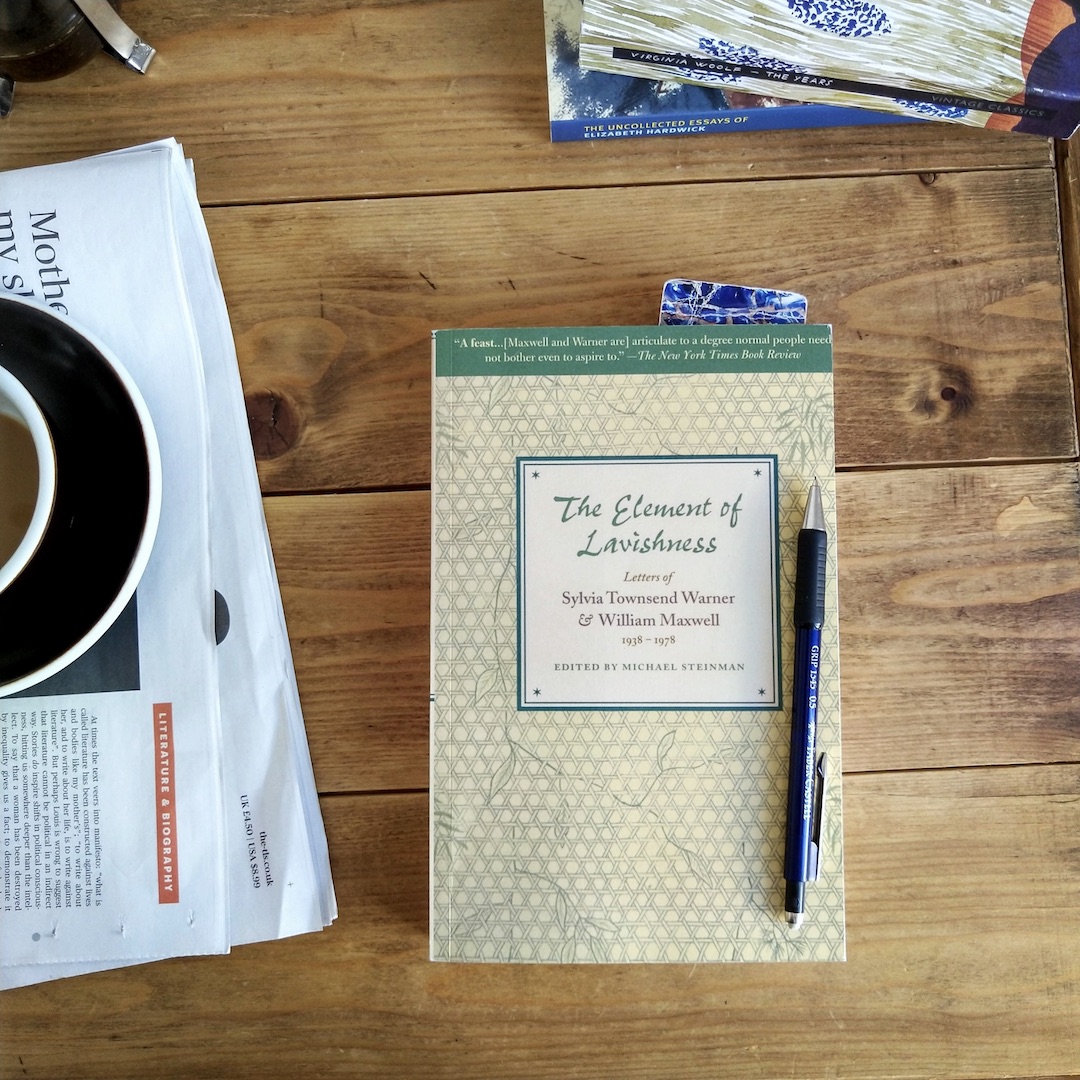
№ 32 reading list: The cover of The Element of Lavishness: Letters of Sylvia Townsend Warner and Williams Maxwell, 1938-1978 · Lisa Stefan


Here is the reading list I promised. Perhaps I should have combined two lists into one because I have started reading books that will be on my next one. And I confess that I'm already looking longingly at books that will be on the list thereafter. One of those is Letters of Leonard Woolf. That would be the husband of Virginia, the man to thank for the access to her personal material, letters, diaries, etc. I enjoy reading letter collections, especially literary ones. Warner and Maxwell's letters on the new list, and in my image above, are gold. Each letter is well crafted and shining through is the mutual respect these writers and friends had for one another.

№ 32 reading list:

1  The Years · Virginia Woolf
2  Virginia Woolf · Hermione Lee
1  A Room of One's Own · Virginia Woolf [rereading]
3  The Uncollected Essays of Elizabeth Hardwick · edited by Alex Andriesse
4  A Splendid Intelligence: The Life of Elizabeth Hardwick  · Cathy Curtis
5  De Profundis and Other Prison Writings · Oscar Wilde
7  The Element of Lavishness: Letters of Sylvia Townsend Warner and
William Maxwell 1938-1978  · edited by Michael Steinman

On my new list is Hermione Lee's biography of Virginia Woolf, which I'm about to finish and can highly recommend to all Woolf fans. Unfortunately, I cannot recommend Woolf's novel The Years. More on that disappointment later. My blog readers know that Elizabeth Hardwick is a favourite; on the list is a new essay collection and the only available biography of her. Now, let's look at a different list, my wish list.

The cover of Memoirs, the autobiographical writing of Robert Lowell
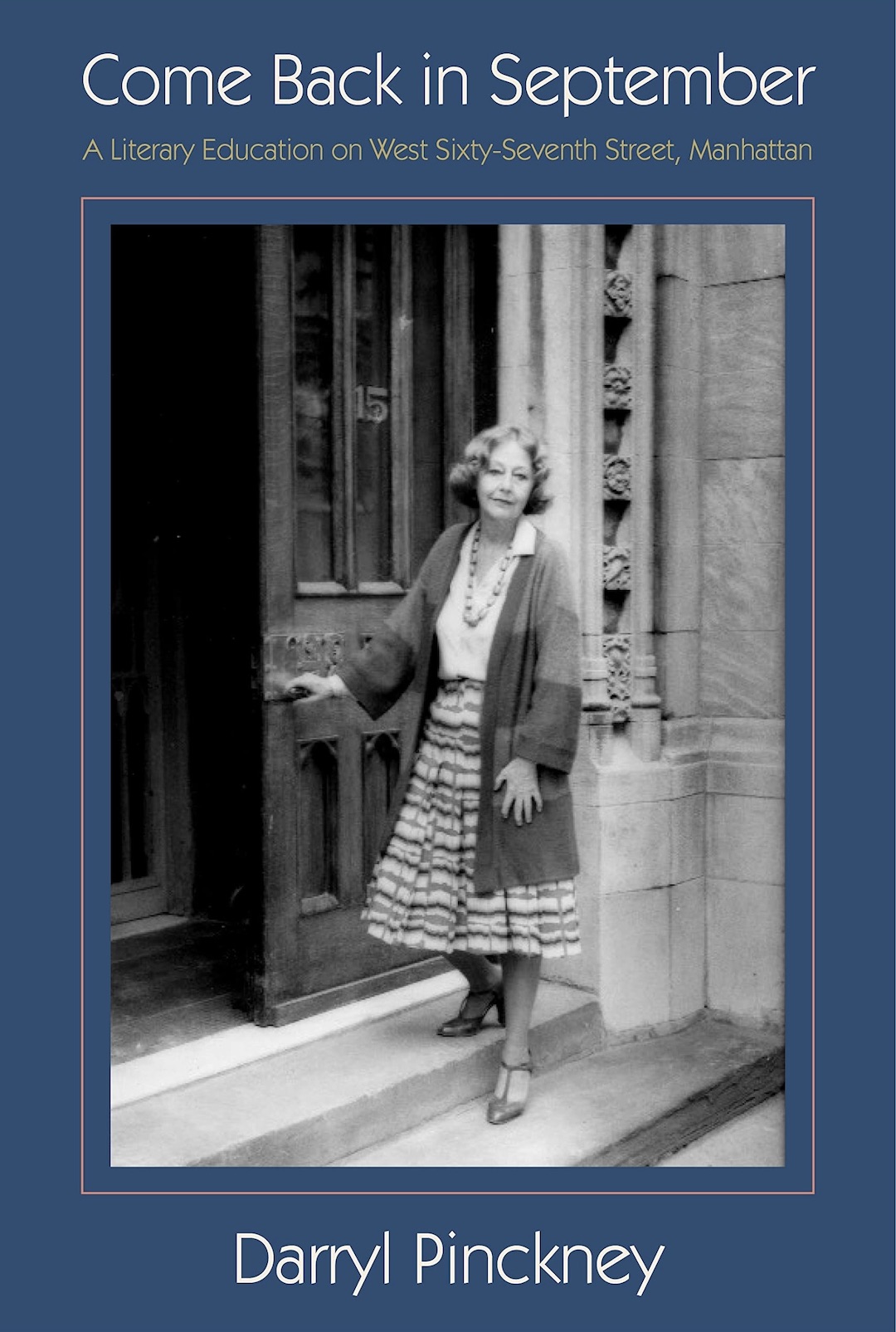
The cover of Come Back in September by Darryl Pinckney

Left: The autobiographical writing of poet Robert Lowell was published in August;
right: Elizabeth Hardwick on the cover of Darryl Pinckney's new book

The wish list keeps getting longer and I would like to mention two new additions. Come Back in September by Darryl Pinckney comes out in October. The book is about his friendship with Hardwick and the editor Barbara Epstein. Both founded the literary magazine The New York Review of Books and were best friends and neighbours on W 67th Street in New York. Memoirs came out in August, a collection of the autobiographical writing of poet Robert Lowell (he was Hardwick's ex). Critics have highly praised it.

My coffee table with books appearing on my next reading list · Lisa Stefan
A nod to my next reading list

images mine, appeared on Instagram 03/08/22 and 17/09/22


Monday, 29 August 2022

Bookshop magic

The cover of Dichter im Café by Hermann Kesten (ars vivendi) · Lisa Stefan


Recently I went to a bookshop to buy two books on my wish list and took a moment to browse. As one does. Suddenly my eye caught something on a low shelf in the plays & poetry corner, the black & white café photograph on the book cover in my pic above. I saw the German title, Dichter im Café (Poet/Poets in the Café) and for a split second read the author’s name as Hermann Hesse before realising it was Hermann Kesten. I had never heard of Kesten, or not that I could recall. I picked it up, turned it over and read:

Das Kaffeehaus - legendärer Treffpunkt
des literarischen Austauschs, Umschlagplatz
revolutionärer Ideen, Bühne des Lebens.

These words on the back cover could be literally translated: The coffee house - legendary meeting place for literary exchange, a hub for revolutionary ideas, the stage of life.

I brought the book to the seating nook, where the magic happened. Well, it had started when I spotted the book but continued as I sat reading the preface. I understood everything; if I didn't understand a single word the context was always clear. The second sentence read: 'Das Kaffeehaus is ein Wartesaal der Poesie' (The coffee house is the waiting room of the poetry) and as I continued I knew I had to buy this book, the only copy left in the bookshop.
My coffee table · Lisa Stefan


My silence on the blog can be explained by a move to the heart of Linz this summer, which you may have seen on Instagram, and various assignments. The beauty of the new location is having a bookshop within a short walking distance - browsing before doing the groceries gives life new meaning. I will be back soon with a new and long overdue reading list.

images mine, the 2nd appeared on Instagram 04/08/22 | cover photo: Horst Friedrichs


Tuesday, 26 April 2022

№ 31 reading list: the letters of Bishop & Lowell

My № 31 reading list: The letters of Elizabeth Bishop and Robert Lowell · Lisa Stefan


Adding Swann's Way to my last reading list (№ 30) was an excellent idea. I'm still reading Proust and cannot understand why I waited so long to read him. His rich prose requires slow reading and I find it best to read 8-10 pages at a time, preferably in the morning. I start my day by reading; I wake up very early with my son, who has to cross Linz and its suburbs by tram to get to school. When he leaves - most people are still asleep - I sit down with coffee, toast and books. These days I start with the poets Elizabeth Bishop and Robert Lowell, with the letters they wrote to each other, before turning to Proust and other writers. My routine ends with whatever German fiction I'm reading at the moment.

№ 31 reading list:

1  Words in Air: The Complete Correspondence Between Elizabeth Bishop
and Robert Lowell  · edited by Thomas Travisano & Saskia Hamilton
2  Upstream: Selected Essays  · Mary Oliver
3  Speak, Memory  · Vladimir Nabokov
4  Personal History  · Katharine Graham
5  Ein ganzes Leben  · Robert Seethaler [German]

I'm still reading Der Untergeher (The Loser, № 30), my third book by the Austrian writer Thomas Bernhard. He is such a witty storyteller. I want to read everything by him in German (I think most of his novels and plays have been translated into English). I have never read anything by his countryman Robert Seethaler and now it's time for Ein ganzes Leben which I bought last summer (A Whole Life, trans. by Charlotte Collins).

Cherry blossoms, Antwerp, spring 2011 · Lisa Stefan
Cherry blossoms, Antwerp 2011

My current bedtime reading is Personal History, the memoir of the late Katharine Graham, the publisher of The Washington Post. It won the Pulitzer Prize in 1998. I started the book a long time ago but held off adding it to a reading list until now. I knew she had devoted many chapters to her family story and upbringing (it's the part of biographies that least appeals to me), so I wanted to get through them first. When her story finally took off I often found it hard to put the book down, but more on that in my next reading journal entry.
On my № 31 reading list: Nabokov's autobiography · Lisa Stefan


images mine, 01 and 03 appeared on Instagram 12/04/21 and 24/04/21


Thursday, 14 April 2022

Reading journal: Virginia Woolf on books

My reading journal: Virginia Woolf's diary & a cup of latte · Lisa Stefan


Virginia Woolf sharing my own thoughts on books:
What a vast fertility of pleasure books hold for me! I went in & found the table laden with books. I looked in & sniffed them all. I could not resist carrying this one* off & broaching it. I think I could happily live here & read forever.
She wrote these delightful words in her diary at Monk's House, Thursday 24 August 1933 (vol. 4, see № 29).
*The Confessions of Arsene Houssaye

image by me, appeared on Instagram 04/02/22


Tuesday, 22 March 2022

№ 30 reading list: Proust in spring

My № 30 reading list: stack of books; Marcel Proust, Lydia Davis, Siri Hustvedt · Lisa Stefan


Spring has arrived and it's time to update the blog with a new reading list. I shared the last one in January but in my defence, I'm more active on my Instagram account with book-related content. For over a decade I have wanted to read Marcel Proust’s masterpiece In Search of Lost Time (À la recherche du temps perdu) and recently bought the 1st volume of 4 by Everyman’s Library. The novel has seven parts and this volume contains Swann's Way (Du côté de chez Swann), which most are familiar with, and the first part of Within a Budding Grove (À l'ombre des jeunes filles en fleurs). I’m only a few pages in and am already captivated by the narrative voice and the rich prose. Proust in spring will be a gratifying pastime.

№ 30 reading list:

1  Essays Two  · Lydia Davis
2  Swann's Way  · Marcel Proust
3  What I Loved  · Siri Hustvedt
4  Der Untergeher  · Thomas Bernhard [German]
5  The Makioka Sisters  · Jun'ichirō Tanizaki [rereading]

Translated by: 1) Swann's Way: C. K. Scott Moncrieff and Terence Kilmartin;
5) The Makioka Sisters: Edward G. Seidensticker

Reading Essays Two spurred me on to read Proust. Lydia Davis translated the latest available English edition of Swann's Way and discusses the project in some of the essays. (The Moncrieff translation I’m reading is older but has been updated.) These essays are my first Davis and I’m also reading Siri Hustvedt’s fiction for the first time. A fun fact: Hustvedt has been married to American writer Paul Auster (4 3 2 1, The New York Trilogy) for forty years who before was married to Davis.

I have mentioned before that each time I’m disappointed with a book and decide to toss it I reread one of my favourite books. On my last list, I had My Brilliant Friend by Elena Ferrante, the first book of her Neapolitan Quartet. I truly made an effort but gave up on Chapter 20. Neither the plot nor the characters appealed to me, and the style felt repetitive. To make it up to me I decided to reread The Makioka Sisters, a Japanese classic by Tanizaki. Before going to sleep, it's comforting to spend some time in the company of the Sisters.

Richard Diebenkorn, Untitled, 1981

image by me | Diebenkorn art via Richard Diebenkorn Foundation on Instagram