Showing posts with label letters. Show all posts

Tuesday, 9 April 2024

The Selected Letters of Ralph Ellison

The cover of The Selected Letters of Ralph Ellison (The Modern Library)


A new blog entry is long overdue and since I'm reading The Selected Letters of Ralph Ellison with my morning coffee these days, I can use this book cover entry to recommend it. Highly! The book was on my wish list for years because I wanted to wait for the paperback edition, published recently by The Modern Library (the hardcover came out about four years ago). The wait was worth it. Ellison knows the art of letter writing and learning his story through his many letters is fascinating. I have yet to read Invisible Man (1952) and Juneteenth (1999, published posthumously) but both are on my list.

The letters are organised by decade with an introduction by editor John F. Callahan for each. I recommend reading the letters first, to allow Ellison to tell his story and his voice to shine. Sometimes there are too many quotes from the letters and interpretations that spoil the 'plot'. Yes, you can talk about a plot in this context because Ellison often writes long letters with plenty of content. The first ones are written in the 1930s, mainly to his mother when he was an impoverished student in Alabama.

He then moves to New York, settling in Harlem later, and it feels as if the book takes off with a letter to the poet Langston Hughes at the beginning of 1939 when Ellison has turned to writing ('There is really little that I can tell you Lang. I spend all of my time trying to make a writer of myself ...'). There are many letters to the writer Richard Wright (his book Native Son was published in 1940) in the 1940s that show Ellison mastering the craft ('You told me I would begin to write when I matured emotionally, when I began to feel what I understood. I am beginning to understand what you meant'). This collection of letters can best be described as a good novel that is hard to put down.

Cover design: Rachel Ake
Cover photo: James Whitmore/The LIFE


The Selected Letters of Ralph Ellison
Edited by John F. Callahan and Marc C. Conner
Paperback, 1072 pages
ISBN: 9780593730072
The Modern Library


Tulips on my coffee table, Easter 2024 · Lisa Stefan
My literary Easter mood/Instagram


Monday, 9 January 2023

№ 34 reading list: Annie Ernaux

On my № 34 reading list, A Man's Place by Annie Ernaux · Lisa Stefan


Happy New Year! I decided to start the blog year with a new reading list which will also be the final one in this format. I'm thinking about giving the lists a break or turning them into round-ups where I recommend some of the books that I have read. Part of me will miss this format because it disciplines me to know what I will be reading a few weeks ahead. At the same time, it takes away the spontaneity when I get a new book that I want to start reading right away, but feel as if I first have to finish the books on my current reading list - a luxury problem, I know. Another reason for the change is that I would like to read more in German to get a better grasp of the language.

№ 34 reading list:

1  A Man's Place  · Annie Ernaux
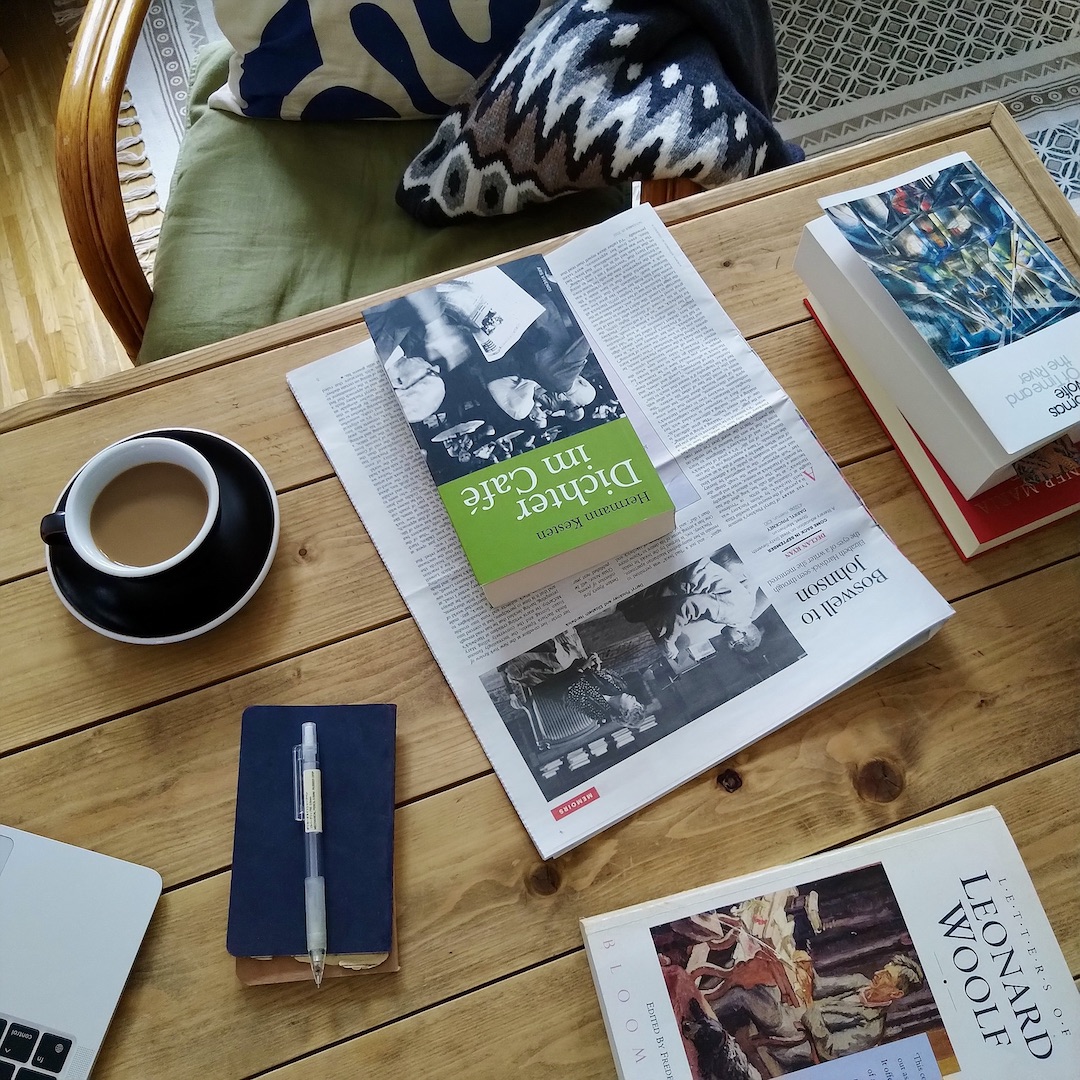
2  Of Time and the River  · Thomas Wolfe
3  Letters of Leonard Woolf  · edited by Frederic Spotts
4  Útsýni  · Guðrún Eva Mínervudóttir [Icelandic]
5  Dichter im Café  · Hermann Kesten [German]

Translated by: 1) A Man's Place: Tanya Leslie

Last year the French writer Annie Ernaux received the Nobel Prize in Literature. Her book on the list, La Place in French, is about her relationship with her barely educated father and the gap that gradually forms between them as her education takes her onto the pathway to the middle class. A recurrent theme throughout the narrative is the importance he attributed to language: she describes an incident where he needs to sign some documents in the presence of a notary. The shame he experiences when he realises that the has misspelt a short phrase is way out of proportion. In this compact book of only 100 pages, Ernaux sometimes pauses to tell us a few words about the writing of it or to share her thoughts related to a certain memory. I read the English translation published by Fitzcarraldo Editions, which has already made 8 books by Ernaux available in English.

Books & coffee on a December morning (№ 34 reading list) · Lisa Stefan
A December morning with books & coffee

I fell for Annie Ernaux when I read The Years (№ 20) for the first time, a kind of memoir that vividly captures a certain period in history, remarkably narrated without the personal pronoun I. Last autumn I bought the German translation, Die Jahre, so I could read the book yet again with the English translation as support. I have also read I Remain in Darkness, which is about her mother who died from Alzheimer's. Reading it sometimes felt like being punched in the stomach because of the raw and revealing writing.

If you are interested in Ernaux I can recommend an episode of the TLS podcast (min. 27:40), broadcast after the Nobel Prize announcement. The writer Lauren Elkin was a guest and mentioned e.g. Ernaux's interest in the theories of the French sociologist Pierre Bourdieu. I first became familiar with his ideas when studying Museology and now I keep him in mind when reading Ernaux.

On my № 34 reading list: A new Icelandic novel, Útsýni, by Guðrún Eva Mínervudóttir · Lisa Stefan
A coffee moment in January with a new Icelandic novel by Mínervudóttir,
a Christmas present from a dear friend

images mine, appeared on Instagram 28/11/22; 01/01/23; 02/12/22


Monday, 26 September 2022

№ 32 reading list: Woolf, Hardwick & new books

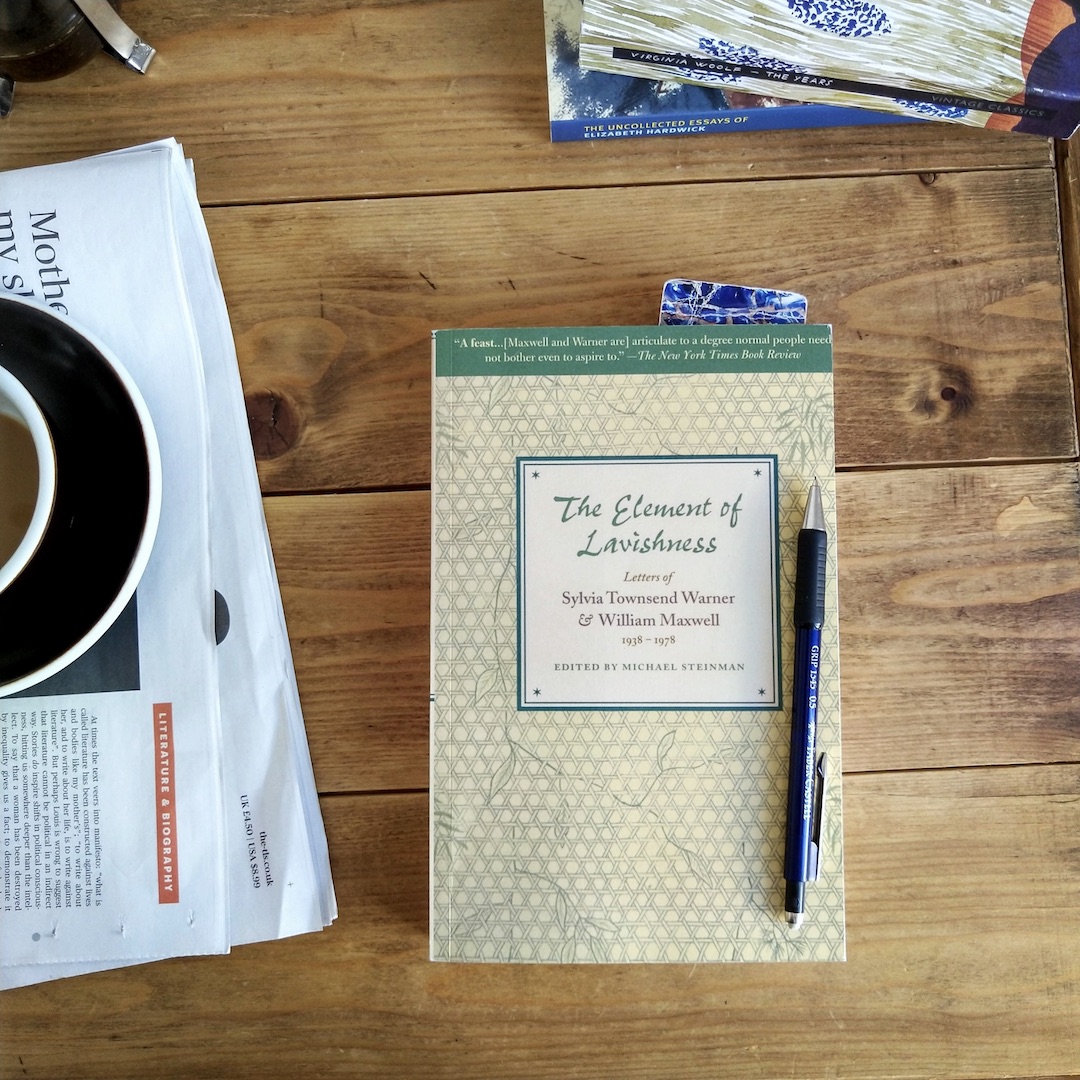
№ 32 reading list: The cover of The Element of Lavishness: Letters of Sylvia Townsend Warner and Williams Maxwell, 1938-1978 · Lisa Stefan


Here is the reading list I promised. Perhaps I should have combined two lists into one because I have started reading books that will be on my next one. And I confess that I'm already looking longingly at books that will be on the list thereafter. One of those is Letters of Leonard Woolf. That would be the husband of Virginia, the man to thank for the access to her personal material, letters, diaries, etc. I enjoy reading letter collections, especially literary ones. Warner and Maxwell's letters on the new list, and in my image above, are gold. Each letter is well crafted and shining through is the mutual respect these writers and friends had for one another.

№ 32 reading list:

1  The Years · Virginia Woolf
2  Virginia Woolf · Hermione Lee
1  A Room of One's Own · Virginia Woolf [rereading]
3  The Uncollected Essays of Elizabeth Hardwick · edited by Alex Andriesse
4  A Splendid Intelligence: The Life of Elizabeth Hardwick  · Cathy Curtis
5  De Profundis and Other Prison Writings · Oscar Wilde
7  The Element of Lavishness: Letters of Sylvia Townsend Warner and
William Maxwell 1938-1978  · edited by Michael Steinman

On my new list is Hermione Lee's biography of Virginia Woolf, which I'm about to finish and can highly recommend to all Woolf fans. Unfortunately, I cannot recommend Woolf's novel The Years. More on that disappointment later. My blog readers know that Elizabeth Hardwick is a favourite; on the list is a new essay collection and the only available biography of her. Now, let's look at a different list, my wish list.

The cover of Memoirs, the autobiographical writing of Robert Lowell
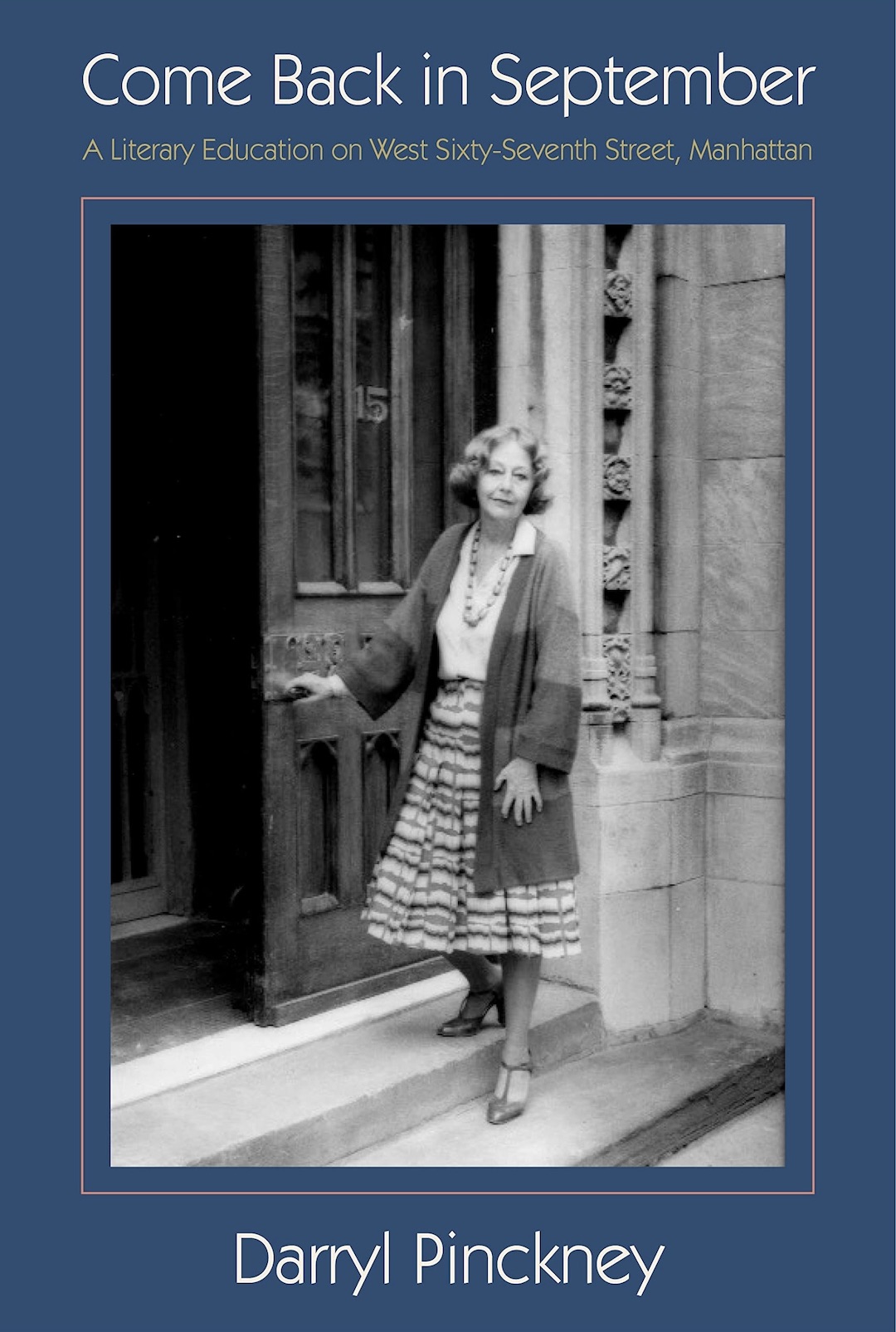
The cover of Come Back in September by Darryl Pinckney

Left: The autobiographical writing of poet Robert Lowell was published in August;
right: Elizabeth Hardwick on the cover of Darryl Pinckney's new book

The wish list keeps getting longer and I would like to mention two new additions. Come Back in September by Darryl Pinckney comes out in October. The book is about his friendship with Hardwick and the editor Barbara Epstein. Both founded the literary magazine The New York Review of Books and were best friends and neighbours on W 67th Street in New York. Memoirs came out in August, a collection of the autobiographical writing of poet Robert Lowell (he was Hardwick's ex). Critics have highly praised it.

My coffee table with books appearing on my next reading list · Lisa Stefan
A nod to my next reading list

images mine, appeared on Instagram 03/08/22 and 17/09/22


Tuesday, 26 April 2022

№ 31 reading list: the letters of Bishop & Lowell

My № 31 reading list: The letters of Elizabeth Bishop and Robert Lowell · Lisa Stefan


Adding Swann's Way to my last reading list (№ 30) was an excellent idea. I'm still reading Proust and cannot understand why I waited so long to read him. His rich prose requires slow reading and I find it best to read 8-10 pages at a time, preferably in the morning. I start my day by reading; I wake up very early with my son, who has to cross Linz and its suburbs by tram to get to school. When he leaves - most people are still asleep - I sit down with coffee, toast and books. These days I start with the poets Elizabeth Bishop and Robert Lowell, with the letters they wrote to each other, before turning to Proust and other writers. My routine ends with whatever German fiction I'm reading at the moment.

№ 31 reading list:

1  Words in Air: The Complete Correspondence Between Elizabeth Bishop
and Robert Lowell  · edited by Thomas Travisano & Saskia Hamilton
2  Upstream: Selected Essays  · Mary Oliver
3  Speak, Memory  · Vladimir Nabokov
4  Personal History  · Katharine Graham
5  Ein ganzes Leben  · Robert Seethaler [German]

I'm still reading Der Untergeher (The Loser, № 30), my third book by the Austrian writer Thomas Bernhard. He is such a witty storyteller. I want to read everything by him in German (I think most of his novels and plays have been translated into English). I have never read anything by his countryman Robert Seethaler and now it's time for Ein ganzes Leben which I bought last summer (A Whole Life, trans. by Charlotte Collins).

Cherry blossoms, Antwerp, spring 2011 · Lisa Stefan
Cherry blossoms, Antwerp 2011

My current bedtime reading is Personal History, the memoir of the late Katharine Graham, the publisher of The Washington Post. It won the Pulitzer Prize in 1998. I started the book a long time ago but held off adding it to a reading list until now. I knew she had devoted many chapters to her family story and upbringing (it's the part of biographies that least appeals to me), so I wanted to get through them first. When her story finally took off I often found it hard to put the book down, but more on that in my next reading journal entry.
On my № 31 reading list: Nabokov's autobiography · Lisa Stefan


images mine, 01 and 03 appeared on Instagram 12/04/21 and 24/04/21


Friday, 7 January 2022

№ 29 reading list: Woolf starts the new year

My № 29 reading list: stack of books; Virginia Woolf, Iris Murdoch, Elena Ferrante · Lisa Stefan


Happy New Year! This week I realised that I completely forgot my New Year's tradition, reading Little Women into the new year. This tradition started in Scotland; I used to read a few pages or chapters into the new year while others were letting off fireworks or whatever entertains them, but this year I watched the fireworks with my son. I made up for my forgetfulness by watching Greta Gerwig's film adaptation (2019), starring Saoirse Ronan, Florence Pugh and Timothée Chalamet. It's great. On New Year's Day morning, I relaxed on the daybed in pyjama bottoms and kimono with coffee and the fourth volume of Virginia Woolf's diary, which starts in 1931. It's on my new reading list.

№ 29 reading list:

1  My Brilliant Friend  · Elena Ferrante
2  The Diary of Virginia Woolf, Volume 4 1931-35 
3  Mrs Dalloway  · Virginia Woolf [rereading]
4  Mythos: The Greek Myths Retold  · Stephen Fry
5  Wittgensteins Neffe: Eine Freundschaft  · Thomas Bernhard [German]
6  Póetík í Reykjavík: Erindi 14 höfunda  [Icelandic]
7  Living on Paper: Letters from Iris Murdoch 1934-1995  · edited by Avril
Horner and Anne Rowe

Translated by: 1) My Brilliant Friend: Ann Goldstein

The list has undergone many changes. Stephen Fry and the Icelandic book (14 literary essays) are the only works that were on the original one, which I meant to share last autumn. I don’t know why it took so long to put this one together, probably a mixture of being busy with my studies and restlessness. I read a few pages, even a few chapters, in a book that I wanted to have on the list only to put that same book aside a short time later. Wanting to read a book is sometimes not enough for me, the time and place have to be right.
№ 29 reading list: stack of books; coffee · Lisa Stefan


I found many wonderful books under the Christmas tree which will appear on lists in the near future. I gave myself a few, e.g. used books that have never been read. Among these are the first two books of the Neapolitan Quartet by Elena Ferrante, the pseudonymous Italian writer. I also bought the Everyman's Library edition of The Makioka Sisters by the Japanese writer Jun'ichirō Tanizaki (№ 6). It's one of my all-time favourite books.

Richard Diebenkorn, Untitled, 1949

images by me | Diebenkorn art via fan page on Twitter


Monday, 13 December 2021

Virginia Woolf – ‘darling dangerous woman‘

Virginia Woolf in lockdown, the cover of Mrs Dalloway · Lisa Stefan


Last year I fell for this cover of Mrs Dalloway you can see in the picture. So much so that I ordered a used copy that looked like new, which never arrived. To make up for it, I decided to buy a new copy for myself as a Christmas present, but I couldn't bring myself to gift wrap it, even though I had already read the book. Instead, Virginia Woolf's novel became my second lockdown book, with Iris Murdoch's Letters.

It so happens that Murdoch mentions Woolf in a letter she writes on Christmas Eve in 1941:
The trouble is, I have been reading Virginia Woolf, the darling dangerous woman, and am in a state of extremely nervous self-consciousness. The most selfish of all states to be in.
‘Darling dangerous woman‘ – love this description.

Each time I reread Woolf it comes more apparent to me how talented she was. The details in her writing, the way she observes people and their behaviour, are extraordinary. I enjoy reading her diaries and often reach for the volumes on my shelves. In her diary, 19 June 1923, Woolf has this to say about the writing of Mrs Dalloway (its working title was The Hours):
But now what do I feel about my writing?—this book, that is, The Hours, if thats its name? One must write from deep feeling, said Dostoevsky. And do I? Or do I fabricate with words, loving them as I do? No I think not. In this book I have almost too many ideas. I want to give life & death, sanity & insanity; I want to criticise the social system, & to show it at work, at its most intense— But here I may be posing.
Yesterday I shared the pic on Instagram with a similar caption but I wanted to keep these quotes on the blog as well. We are still in lockdown which is supposed to end on the 17th of December. Yesterday, other Austrian states lifted most restrictions but this latest wave was severer in Upper Austria and we knew that our lockdown would last longer.

image mine, appeared on Instagram 12/12/21


Sunday, 21 November 2021

Books in lockdown

The cover of 'Living on Paper: Letters from Iris Murdoch 1934-1995' · Lisa Stefan


On Friday I walked to the post office to pick up a tome, about seven hundred pages of Iris Murdoch's letters, Living on Paper: Letters from Iris Murdoch 1934-1995. Initially, I bought it to put under the Christmas tree, a gift from me to myself, but instead, it will be my lockdown book. A book with a role.

Tomorrow Austria goes into lockdown due to a surge in COVID cases. It's safe to say that the mood is peculiar these days; I believe I’m not the only one dealing with lockdown weariness. I had been looking forward to finishing this term in early December, strolling the decorated streets of Linz, and spending time in bookshops and snug cafés. We can expect everything to reopen sometime before Christmas, meaning the city centre will be crowded, which I do not care for despite being vaccinated. One advantage of a lockdown is the ample time for pleasure reading and cosiness at home. A decent stack of books awaits me so I cannot complain.
Cultural heritage studies · Lisa Stefan


With lots of unread books on my shelves, there will be no shortage of books in this lockdown. Recently I was in a bookshop and bought two German ones, including Medea. Stimmen by Christa Wolf (1929-2011). I have never read her work. I was in the mood for Greek mythology because during coffee breaks this autumn I have kept Mythos by Stephen Fry within reach. What a fun read, he's so witty. I have also been reading a new collection of Icelandic literary essays, Póetík í Reykavík: Erindi 14 höfunda. This publication celebrates the 10th anniversary of Reykjavik being a UNESCO City of Literature. One of the authors was so kind to send me a copy unexpectedly. These books will be on my next reading list, which I have been postponing to share on the blog.

Veggie pasta & studies · Lisa Stefan
A classic study break with veggie pasta

A bookshop at Der Linzer Hauptplatz: Alex Buchhandlung · Lisa Stefan
The entrance of Alex - Eine Buchhandlung

One bookshop I like is called Alex Buchhandlung, located at Der Linzer Hauptplatz, a large square close to the main bridge over the Danube River. It's a small bookshop with a vast selection of German books. I almost bought there a Fischer edition of Franz Kafka's diaries but thought to myself that my German might not be good enough to truly enjoy it. I decided to wait until I had read his stories The Judgement and Metamorphosis, which have been sitting on my shelves. I read an Icelandic translation of the latter ages ago but I have yet to read Kafka in German.
The cover of Kafka's stories in German (Fischer) · Lisa Stefan


images mine, the 1st, 2nd and 5th appeared on Instagram 19/11/21; 15/11/21; 02/10/21


Friday, 19 June 2020

№ 23 reading list: The Dolphin Letters

A stack of books: № 23 reading list: The Dolphin Letters · Lisa Stefan


I cannot remember when I first heard of Elizabeth Hardwick - it must have been in relation to her essay collection Seduction and Betrayal (1974) - but it wasn't until 2018 that I read her work. Last year I was excited about the publication of The Dolphin Letters, 1970-1979, a collection of letters exchanged between Hardwick and her ex, poet Robert Lowell (d. 1977), and their friends. To give you a little backstory: The title refers to Lowell's poem collection that earned him his second Pulitzer Prize in 1974. What made it controversial was that Lowell not only used Hardwick's letters, written to him in a state of emotional distress, but also changed them to fit his narrative. I thought it would take a few weeks to read through 500 pages of correspondence but found myself unable to put the book down and finished it in a few days. When I was done I went back to page 1 and started all over again, reading one or two letters before bedtime.

№ 23 reading list:

1  Sleepless Nights · Elizabeth Hardwick
2  The Dolphin Letters, 1970-1979: Elizabeth Hardwick, Robert
Lowell, and Their Circle  edited by Saskia Hamilton
3  How to Write an Autobiographical Novel · Alexander Chee
4  A Tale of Love and Darkness · Amos Oz
5  Mislæg gatnamót · Þórdís Gísladóttir [Icelandic poetry]
6  To Kill a Mockingbird · Harper Lee [rereading]
7  Museums as Cultures of Copies  edited by Brita Brenna, Hans
Dam Christensen and Olav Hamran

Translated by: 4) A Tale of Love and Darkness: Nicholas de Lange

I would like to thank Routledge for the museum studies textbook on the list, which consists of 17 chapters by leading scholars in the field. It will enable me to keep up with my studies this summer without any deadlines.

Back to The Dolphin Letters, 1970-1979: If you already know the backstory and are intrigued then you may want to watch writer and critic Hilton Als in conversation with Saskia Hamilton, who edited the letter collection and added useful footnotes. What made this event even more memorable is actress Kathleen Chalfant's citation of three letters by Hardwick. In my copy I have marked many sections, one where Hardwick describes a certain mood in a letter to Lowell on January 13, 1976, when they were back on friendly terms:
... and strangely enough I do feel like writing just now and have fallen into a mood of reading books, thinking, idling about–all that puts one into the frame that makes writing possible and the life of literature beautiful and thrilling.
On the reading list is also Hardwick's Sleepless Nights (1979), a slim novel, partly autofiction, which I have also finished. I think I benefited from reading it after her personal letters, in which one learns about its writing process.
A stack of books: № 23 reading list · Lisa Stefan


Tuesday, 9 June 2020

Reading journal: Beauvoir & Kafka

Book covers, from my reading journal · Lisa Stefan


I thought it best to sneak in a reading journal entry before sharing more book covers. The book cover entries are tempting because I don’t have to grab my camera and I would like to have some covers on the blog for future reference. If you were worried about the coronavirus pandemic preventing the publication of books, I think you can breathe calmly. Plenty of books are about to hit the shelves and let's hope the content is as promising as the covers.

Reading journal, № 14 reading list, 2 of 7:

· Letters to Friends, Family & Editors by Franz Kafka. This is the first collection of letters by Kafka that I read and own. I was in no hurry to finish it so once I had read enough letters to get a feel for his voice, I read a letter or two in bed. The letters show the reader different sides of Kafka, from his student years in Prague in the early 1900s to his final months at a sanatorium near Vienna in 1924, where he died from tuberculosis. In letters to friends, he is less formal, of course, especially when writing to Max Brod who collected Kafka’s letters after his death, and it is through these personal letters that we see his health deteriorating. A more formal tone characterises the letters to his editors where he discusses manuscripts and even book design and fonts before publication. Perhaps those are more appealing to scholars.

The women in his life, Felice Bauer, Milena Jesenská-Polak, Julie Wohryzek, and Dora Dymant, appear on the pages, but the letters to Felice and Milena are available in separate editions: Letters to Felice (I recently shared the book cover) and Letters to Milena. The one thing that bothered me during the reading relates to the book's layout: The notes are at the back instead of appearing in footnotes, which would have been more convenient for the reader. This was especially annoying when reading many letters in a setting and constantly having to look up the notes. [Schocken; translated by Richard and Clara Winston]

· The Prime of Life by Simone de Beauvoir – autobiography, 2nd vol. It's been a while since I finished this one, which covers the years 1929 to 1944, and lately I have been gliding over sections where I had left a mark on the margin. I liked this volume more than the first but have to add that in the first chapters Beauvoir was sometimes too keen on sharing details: It sometimes felt as if she had to mention and describe every person that crossed her path. It happened less as the story progressed and the second world war drew nearer.

On three pages (319-321) spanning the period from 1937 to 1938, war is coming and clearly, the situation has started to affect her mental well-being:
Indeed, I now passed through one of the most depressing periods of my whole life. I refused to admit that war was even possible, let alone imminent. But it was no use my playing the ostrich; the growing perils all around crushed me beneath their weight.

If the Spanish tragedy dismayed us, events in Germany scared us stiff. In September, at Nuremberg, before an audience of 300,000 Nazis and something like a million visitors, Hitler delivered his most aggressive speech yet.

For my own part I was still trying to delude myself, and refusing to face the facts. But the future had begun to open up under my very feet, and produced in me a sick feeling akin to real anguish. No doubt that is why I retain only a misty recollection of this entire year. Nor can I remember anything of outstanding interest in my private life.
Matisse cover: Used copy of The Prime of Life by Simone de Beauvoir - autobiography, Vol. 2 · Lisa Hjalt


When the Germans invade Poland, on 1 September 1939, her narrative becomes a diary that ends on 14 July 1940. On 14 September, for example, she goes to the cinema and reads Portrait of a Lady by Henry James in bed. She doesn’t write daily and nothing at all after the fall of Paris, on 14 June 1940. Despite the war, there is no shortage of discussion of literature and philosophy on the pages, and it should be noted that the book is dedicated to Jean-Paul Sartre, who was her soulmate. It's truly interesting to read about life in France, about Paris in wartime; about visits to Café de Flore, on the corner of Boulevard Saint-Germain and Rue Saint-Benoît, which she and Sartre frequented ('It was our own special resort. We felt at home there; it sheltered us from the outside world.'). In this volume the reader witnesses the birth of the author, but in 1943 her first novel, She Came to Stay (original title L’Invitée) was published. During the war, she also worked on other books such as the philosophical essay Pyrrhus et Cinéas and two novels: The Blood of Others (Le Sang des autres) and All Men Are Mortal (Tous les hommes sont mortels). [Penguin; translated by Peter Green]

It is worth noting that some of Beauvoir's letters, published later, contradict the narrative of her autobiography. Finally, a few words about my copy which I hold dear. It was bought used, released in 1976, and is now so worn that it is falling apart. Gracing its cover is one of artist Matisse's blue cut-outs, Blue Nude with Flowing Hair, 1952.

images by me, appeared on Instagram 08/03/2018 and 11/07/2017