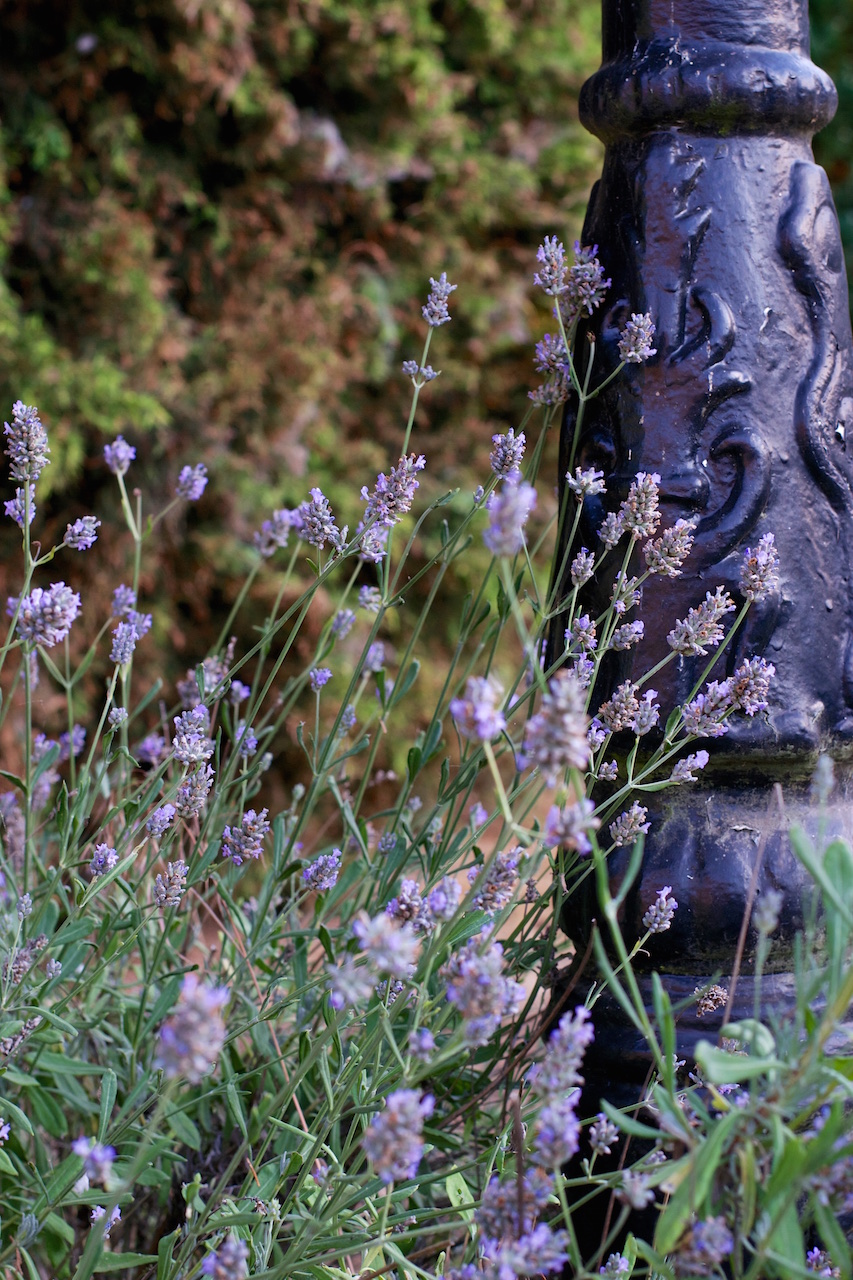
The other day my son and I were having breakfast when he asked me what were my favourite flowers. Without thinking I said carnations (on the table was a vase with yellow ones). 'Why?' he asked. 'Because they are durable,' I said, 'they last long.' A few years back I would have said white tulips or peonies, without a doubt. When I think about it I cannot really choose between these three, but carnations are the flowers I buy most of the time (the Spaniards were on to something when they chose the red carnation as their national flower). This is an image I snapped in my study this morning while enjoying a nutmeg latte. Carnations and stacks of books on my desk is a common sight.
Showing posts with label bohemian. Show all posts
Wednesday, 22 March 2017
Wednesday, 2 March 2016
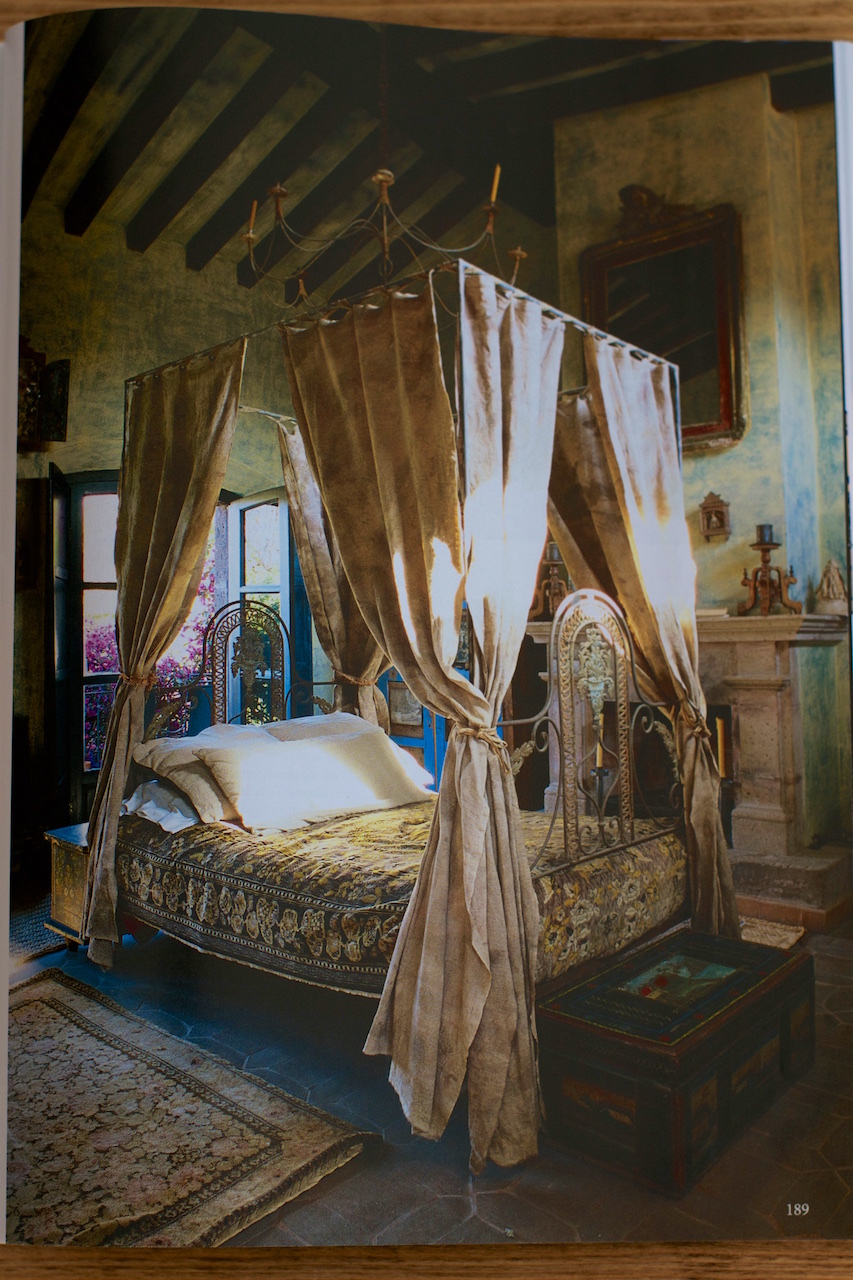
Deborah Turbeville's 'Casa No Name'
Last Friday I told you I had snapped a few photos of a Mexican home that I promised to share. The house tour appeared in the December 2015 issue of The World of Interiors, in a feature called Destination unknown, lensed by Ricardo Labougle. The house belonged to the late fashion photographer Deborah Turbeville (1932-2013), who lived a nomadic life. She named it Casa No Name. It's located in the historic city San Miguel de Allende, in Guanajuato. When Turbeville bought the house it was in a terrible state, but if you are familiar with her photography it is easy to understand why it fascinated her. A friend of hers, who oversaw the two-year restoration told the workers to 'not ... make too perfect a job of it, for "The señora likes it that way"' (p. 190). There is no one thing that draws me to this house; it's the richness of it that captivates me, the gorgeous blend of patterned textiles, colours, plaster walls, the breathtaking roof terrace . . . this is what they mean when they talk about turning a house into a home.


In 2009, Rizzoli published the book Casa No Name by Turbeville herself. I have seen some of the images from the book and I cannot say it's a book for everyone. Let's just say that it's a different interior design book with a lot of blurry images. Hard-core Turbeville fans will probably love it.
I found a short interview with Turbeville on YouTube, taken at Casa No Name when Toast was shooting their Spring/Summer 2010 lookbook there.
For everyone interested in fashion photography I would recommend the book Deborah Turbeville: The Fashion Pictures. It's also published by Rizzoli and you will find in it the infamous bathhouse photos, which shocked when they appeared in Vogue in 1975.
images by me | credit: The World of Interiors, December 2015, Destination unknown, pp. 182-191 · Ricardo Labougle
Wednesday, 16 September 2015
Charleston: A Bloomsbury House & Garden
This summer my collection of coffee table books grew larger when on my birthday I got a copy of Charleston: A Bloomsbury House and Garden by Quentin Bell and his daughter Virginia Nicholson. Quentin was the son of artist Vanessa Bell (author Virginia Woolf's sister) and her husband Clive. The book tells the story of the Charleston House in Sussex, which Vanessa took on rent during World War I - by then her marriage to Clive was in name only. Her sons lived with her, as did artist Duncan Grant and his friend David Garnett, who were lovers. Actually, many years later David married her and Duncan's daughter, Angelica, who was born in the house. That is not the subject of this blog post but let's just say that relationships often got a little complicated, or shall we say interesting, within the Bloomsbury group, as the circle of friends was called (see also my recent post on BBC's Life in Squares). The book about Charleston is enjoyable and the decorative details are a constant source of inspiration. This is a bohemian style with a wonderfully personal and artistic twist.
![]() |
| Vanessa Bell's bedroom, p. 58 |
The way the book is set up each room gets a chapter that tells its story, how it was used in the beginning and later decorated. Quentin was 85 years old when he started writing the book. He had finished the first draft when his health deteriorated. When he was unable to write his daughter, Virginia, who also knew the house well, sat with him and listened to his stories of the house and recorded them on tape. He died in 1996 and she finished the book. The chapters are divided into sections marked with their initials, so the reader always knows who's telling the story. Alen MacWeeney photographed each room for the book and every photo has a caption explaining the details. There are also old black and white photos of the inhabitants and their friends, but the house was a popular holiday home for the Bloomsbury circle.
Vanessa's bedroom, seen above, used to be the larder but in 1939 it was converted and a tiny window was replaced with a French window that opens onto the garden. I have never visited Charleston but this corner has become my favourite. Her beautiful desk is a 19th-century French fall-front secretaire. She designed the curtain fabric for the Omega Workshops in 1913. The curtains in the photo are a reproduction of the original fabric by Laura Ashley in 1986.
![]() |
| Duncan's sitting room in the studio, p. 67 |
Vanessa later negotiated a long lease on Charleston, which meant that she and Duncan were able to construct a proper studio. It was ready in 1925 with plenty of space to paint and there was room for a sitter or model. Roger Fry, a member of the Bloomsbury group and the founder of the Omega Workshops, helped with the construction. Part of the space became Duncan's sitting room. Duncan decorated the screen behind the chair and the panels around the fireplace in the 1930s. Later, in 1939, Vanessa turned a room on the second floor into a studio of her own.
![]() |
| The window in Duncan's bedroom, p. 109 |
Quentin writes that he has slept in all the rooms in Charleston but Duncan's bedroom remains his favourite room, having 'the most complete decorative scheme of any in the house' (p. 108). Vanessa painted the decorations in the window embrasure and she also designed the cover of the antique French window seat.
![]() |
| In Clive Bell's study, p. 47 |
The above photo shows Clive Bell's study, which used to be a living room. Clive had been a frequent visitor at Charleston but in 1939 he moved in. Vanessa painted the window embrasure in 1916-17. Duncan decorated the tiles set into the tabletop in the 1920s or 1930s.
Until I am able to visit the Charleston House (see their website for opening hours) I will enjoy its rooms and decorative objects in my book. My only regret is not having the hardcover edition because I know that this book will become more precious than others on my coffee table.
A constant source of inspiration, indeed.
![]() |
| Zarafshan linen fabric in rust/slate by Lewis & Wood |
A final note: All the textile samples I used in the styling are from Lewis & Wood. The fabric, inspired by the Eastern Suzani tradition, is Zarafshan, made from 100% linen. It is available in various colours, three shown here: In the first two images Indigo/Cranberry, the third Turquoise/Lime, and in the last two Rust/Slate. More on Lewis & Wood later.
Thursday, 20 August 2015
Interior design: built-in nooks
This summer my admiration for built-in nooks has reached a whole new level. I think it started with an Ibizan house tour in Elle Decoration UK that I shared in a blog post in June. From then on these types of nooks were demanding my attention everywhere; also the textiles, the covers and cushions chosen to make them comfortable. I have a French issue of Elle Decoration from last summer that is filled with built-in nooks. It has been on my table this summer and I just had to take a few photos for the blog. You see, I look at my blog as a diary. I don't write one, by that I mean the dear diary type, but I note down things in my journals all the time. The visual part is very important to me as well and I like being able to store these images on the blog for others to enjoy but also for myself to look them up later.
Let us start with a few nooks that appeared in a feature on Scorcialupi, a holiday rental in the Italian region of Puglia. I find the outdoor living area above absolutely stunning. The two indoor ones below are also neat.


1-3: Scorcialupi, Elle Decoration (French), July/August 2014, pp. 108-117/Christian Schaulin
As much as I like the nook below, with its harmonious colour palette, I'm not sure I would want one in my outdoor dining area, especially if I were entertaining. If one person has to stand up then others have to move or make space. However, this kind of rustic style is right up my alley and I like how the industrial Tolix chairs create contrast (this photo only shows one clearly). The nook belongs to a beautiful and stylish home on the Greek island of Mykonos.
![]() |
4: Mykonos house tour, Elle Decoration (French), July/August 2014, pp. 130-141/Giorgio Baroni
|
Thursday, 13 August 2015
BBC's Life in Squares: The Bloomsbury group
Did you watch the miniseries Life in Squares on BBC? It was introduced as a three-part drama about the relationship between English painter Vanessa Bell and her sister, writer Virginia Woolf. To me it felt more like the story of Vanessa and artist Duncan Grant's relationship. Not that I'm complaining, I thoroughly enjoyed the series and its beautiful set design and costumes. Actress Phoebe Fox plays the younger Vanessa and Eve Best the older. I hadn't seen Fox in anything before and was very impressed with her performance; she fit well into my idea of Vanessa. James Norton is memorable in the role of younger Duncan (I first saw him as Tommy in Happy Valley) and so is Rupert Penry-Jones in that of the older. In fact, the entire cast is wonderful, an assembly of fine British actors who give great performances and bring to life on screen the famous avant-garde Bloomsbury group and its bohemian lifestyle, with the help of screenwriter Amanda Coe and Swedish director Simon Kaijser.
The series is still available on the BBC iPlayer but will soon be released on DVD. If you haven't already watched it I have to warn you about the first episode. A lot of material is crammed into it - love affairs and deaths - that will make much more sense to those already familiar with the individuals of the Bloomsbury circle. It's my personal opinion that there should have been four episodes instead of three to better introduce the characters. In episode 2 the storytelling becomes much more flowing and easier to follow.
Maybe it's a cliché to call the lifestyle of the Bloomsbury group bohemian, as I did above, but the mise en scène certainly is. Think paintings, art supplies, desks, books, letters, etc. During the World War I, Vanessa Bell set up a home in the Charleston House in Sussex, where the main part of the Life in Squares takes place. You will find beautiful images of its artistic interiors on the website of House & Garden.


For me the timing of the series is interesting because in the beginning of this summer I picked up Virginia Woolf's To the Lighthouse, which I tend to read in summertime. During the reading I started thinking about the sisters, watched The Hours (2002) for the hundredth time, and pre-ordered the paperback edition of Vanessa Bell by Frances Spalding. I realised my focus had always been on Virginia and her story, and I didn't know enough about Vanessa. The series has now given me a better idea and I'm even more eager to receive the biography in the mail.
![]() |
| The World of Interiors, September 2014, p. 146 |
I have what I can only call a longstanding infatuation with Virginia Woolf. I cannot remember when it started, and I cannot remember which of her work I read first. So much has been written about her life and if you are interested in her story I can recommend the book Moments Of Being: Autobiographical Writings. Then there is her nephew Quentin Bell's (son of Vanessa and Clive Bell) biography about her life from the year 1912 to 1941, Virginia Woolf: A Biography. Her husband Leonard Woolf edited her diaries and published them after her death (see A Writer's Diary: Being Extracts from the Diary of Virginia Woolf).
After watching Life in Squares I'm eager to go a little Bloomsbury-group crazy. I'm looking forward to reading the aforementioned biography of Vanessa Bell and then I would love to watch again Carrington (1995), starring two of my favourites, Emma Thompson as Dora Carrington and Jonathan Pryce as Lytton Strachey (see trailer). There is a film in the making by Dutch director Sacha Polak called Vita & Virginia, about Virginia's relationship with Vita Sackville-West. More to look forward to!
![]() |
Monday, 1 June 2015
Stylish bohemian vibes in Ibiza
On Saturday the latest issue of Elle Decoration UK arrived in the mail and the house tour I fell flat for was a 300-year-old finca with stylish bohemian vibes, in a remote area of Ibiza. It doesn't happen often that I more or less like every single room when viewing homes in magazines, but I have been just a tad obsessed with this one (that top image is now decorating my desktop). The feature, Where the cicadas sing, was photographed by Sunna and Marc Van Praag. I had to snap a few photos to share with you, of the corners in this home that make my heart sing.


The rustic part of the house especially appeals to me, like these ornate built-in seating nooks next to the kitchen (not shown in the magazine). This look feels so inviting. The dining area connects with the sitting area and also has a built-in nook. The nooks have a mix of textiles, cushions and covers in solid colours and with patterns. The home is inspired by the owners' travels and there are quite many global finds. I'm fascinated by that lamp between the nooks (hence the detail photo to the left) but it doesn't say in the article where it comes from.
![]() |
Rustic sitting area with a fireplace and a built-in nook
|
Other decorative objects that caught my attention were the ornate vases on the table below and on the stairs, and also beautiful rugs throughout the house.
The bathroom has arched original walls and stylish Spanish tiles. Don't get me started on the rug! I had to include the outdoor living area with the swimming pool. To see the rest of the house you need to get yourself a copy of the issue!


For those who aren't familiar with Ibiza, it's a Spanish island, part of the Balearic Islands in the Mediterranean Sea. Since I can remember Ibiza has always been associated with partying and nightlife, a quality that has never attracted me to any destination. But I have always been fascinated with its small villages and quiet resorts, and its mix of cultures, which is why Ibiza is on my to-visit list. There is this one old blog post, Colours of Ibiza, by María of EclecChic that shows exactly what it is that lures me to the island.
There is one more feature in the July 2015 issue of Elle Decoration UK that deserves a mention. It's an article about architect and designer Alexander Girard (1907-1993). The Vitra Design Museum in Weil am Rhein is planning an exhibition of his work in 2016. (The museum is located right in the corner where Germany, Switzerland and France meet.) Here is a link to Alexander Girard's design for Vitra - I love his matchboxes.
images by me | credit: Elle Decoration UK, July 2015, Where the cicadas sing, pp. 98-107 · Sunna and Mark Van Praag
Subscribe to:
Posts (Atom)