Showing posts with label coffee. Show all posts

Wednesday, 17 January 2018

Textiles and Persians

Schuyler Samperton Textiles · Lisa Stefan


If you thought this blog entry was about Persian textiles you have been lured to the blog on false pretences; I'm referring to my Persian cat, who did some serious photobombing the other day when I was photographing patterned fabrics by Schuyler Samperton Textiles. It was a relaxing day, with the sun in hiding but every now and then brightening up our reading nook quite generously, and I had spread books, interior magazines and fabric samples all over the coffee table. There was coffee too.

A certain colour palette had formed in my head and all of a sudden I realised how beautifully it harmonised with the January 2018 cover of The World of Interiors. I picked the fabric samples needed, grabbed the camera, and had shot perhaps four or five photos when my Persian prince appeared on the scene ... and refused to budge (I should have known, he likes sleeping in between my books). I tried to work around him but he kept popping up in the frame. The last photo shows the end result: he had his way and I called it a day.

Schuyler Samperton Textiles · Lisa Stefan
Caledonia, Doshi and Firefly fabrics by Schuyler Samperton Textiles

Back to that colour palette. I chose three designs by Schuyler Samperton Textiles. The floral fabric with the bird motif is called Caledonia, seen here in the colourways Peony (above in the foreground) and Imperial (under the cup). The design with the loosely printed botanical motif is Doshi, in the colourways Hibiscus and Aubergine. Sandwiched between the two is the Firefly in Plum. In blue it's called Deep End.


A Persian prince enters.

The World of Interiors & Schuyler Samperton Textiles · Lisa Stefan
Bedroom image from The World of Interiors, January 2018/Simon Upton

The cover photo of the January 2018 issue of The World of Interiors was lensed by Simon Upton. The magazine visited the home, a transformed warehouse in Milan, of art director Roberto Gerosa. The bedroom is textile heaven.
Persian cat sleeping & Schuyler Samperton Textiles · Lisa Stefan


All's well that ends well.


Sunday, 24 December 2017

№ 13 reading list | Happy Holidays

№ 13 reading list | Happy Holidays · Lisa Stefan


Earlier this week, I promised to share a short reading list - this one is № 13 - before the holidays (I snapped the photo a couple of days ago between the gift-wrapping; you should see how much the hyacinths have grown since then!). At this moment, I'm enjoying a coffee break while leafing through the latest issue, January 2018, of The World of Interiors, which our oldest brought me from the UK. Tonight and tomorrow's desserts are ready and soon we will start preparing our Christmas Eve feast. The Nordic tradition is to celebrate Christmas on this day with a fancy meal, following the opening of presents.

№ 13 reading list:
1  The Underground Railroad  by Colson Whitehead
2  Giovanni's Room  by James Baldwin
3  Der Gute Mensch von Sezuan  by Bertolt Brecht [German]
4  Jane Eyre  by Charlotte Brontë

Last summer I bought a copy of Giovanni's Room by James Baldwin and I have been waiting for a more quiet time to read it. If my last blog post escaped you, he has become my new favourite author. Over the holidays, I have made it a habit to reread one classic and this year I chose Jane Eyre. It's been years since I read it and last Christmas I got this beautiful Penguin clothbound edition. It's been staring at me for a year and I swear I can sometimes hear it whisper, Read me!  The other two you may have spotted on Instagram already; Whitehead was part of a book gift from a dear friend in Iceland and the play by Brecht was the first book I bought in German after the move (here is a Bloomsbury edition in English, The Good Person of Szechwan, translated by John Willett). I'm already reading it, but slowly. Very slowly. It's my way to try to reclaim my German vocabulary.

I wish you all Merry Christmas and a Happy New Year!


Thursday, 1 June 2017

№ 9 reading list: Japanese literature I

№ 9 reading list: Japanese literature I · Lisa Stefan


Months ago the idea of a Japanese reading list started sprouting in my mind, and once I began writing down authors and titles in my pocket notebook I realised that there would be more than one list. Despite the word snow appearing in one of the titles below, it somehow felt right to ease into the summer reading Japanese literature. This first list is slightly shorter than intended, for the simple reason that one of the books I ordered hasn't arrived and at the last minute I decided not to include two works by the same author. It means that a novel by Yasunari Kawabata, who received the Nobel Prize in Literature in 1968, will appear on the next list. My blog readers will recognise Tanizaki, but his novel The Makioka Sisters was on an earlier list. I love the fact that at least one blog reader read and enjoyed it as much as I did.

№ 9 reading list:
1  First Snow on Fuji  by Yasunari Kawabata
2  The Temple of the Golden Pavilion  by Yukio Mishima
3  Some Prefer Nettles  by Jun'ichirō Tanizaki
4  The Tale of Genji  by Murasaki Shikibu *
5  The Tale of Genji  by Murasaki Shikibu **
6  My Neighbor Totoro: The Novel  by Tsugiko Kubo ***

Translated by: * Edward G. Seidensticker; ** Dennis Washburn
*** Illustrated by Hayao Miyazaki

As you can see, there are two unabridged editions of The Tale of Genji and I still haven't decided which one to read. The Washburn translation is a new paperback edition by W. W Norton & Co, the other an Everyman's Library edition. I'm trying to order the translation by Seidensticker through my local library, which is the main reason I have postponed sharing the list. If it fails to arrive I'm not sure at this point which one I will purchase. On my Instagram account you may have noticed that I'm already reading The Temple of the Golden Pavilion by Mishima. He fictionalised the story of the monk who in 1950 set fire to the Golden Pavilion of Kyoto, erected in the 15th century (the American airplanes spared the temples during the war). This was a shocking event. During the trial the young monk said he was protesting against the commercialisation of Buddhism. However, scholar Donald Keene writes in the introduction that 'he may have been directly inspired by nothing more significant than pique over having been given a worn garment when he had asked the Superior of the temple for an overcoat'! I'm more than halfway through the book with the pavilion still standing, and troubling the mind of the rather repulsive protagonist.


Have you seen the animation My Neighbour Totoro (1988) by Hayao Miyazaki? It's one of the Japanese favourites in our home. Last year my son and I were sitting at the café of our local Waterstones when he spotted the book on a shelf. We didn't even know it existed and learned then and there that the film had been turned into a novel, featuring Miyazaki's illustrations. It's a beautiful book and of course we walked out of the bookshop with a purchased copy. My son loved reading the story and now it's my turn.


Saturday, 13 May 2017

Reading journal 2017: Lessing, Athill, Borges ...

My reading journal: Lessing, Athill, Borges ... · Lisa Stefan


The other day I came across a fantastic word you won't find in a dictionary: readlief. It means when you finally get around to start a book you have been meaning to read for years. My reading lists have led to many readliefs. It's rewarding to cross a book off the list, more so when it's a good read. My to-read list doesn't get any shorter, though, as I'm constantly coming across books to add to it. The book lover's dilemma. Below I'm sharing some thoughts on books from my № 7 reading list, which I posted in February. I have created a new category for these kinds of blog entries that I call Reading journal (the year in the title indicates when that particular list appeared on the blog).

№ 7 reading list (6 of 9):

· Fictions by Jorge Luis Borges. This short story collection, described as original, is literary and philosophical, and not for everyone. I have never read anything like it. The first two stories didn't quite grab me but as soon I started the third one, I was hooked. That one is called 'Pierre Menard, Author of the Quixote' (appeared in the Argentine literary journal Sur in May 1939), about a man who rewrites Don Quixote by Cervantes, line-for-line. The idea is brilliant.

· The Grass is Singing by Doris Lessing. When I finished the book my first thought was: powerful. Since then I have heard other people use that same word about the book, which was Lessing's first novel, published in 1950. It starts with the murder of the main character Mary Turner and as you read on you learn about her background and what led to the tragedy, basically the disintegration of her life on a farm in Southern Rhodesia (now Zimbabwe). Lessing grew up there and masterfully describes the African landscape. It's been months since I finished the book and I'm still thinking about it. A good psychology study.

· The Golden Notebook by Doris Lessing. This one has become a classic but it's not for everyone. There were parts that I struggled with, parts that I found either repetitive or too long, and it took me quite some time to finish it. However, one cannot argue with the fact that this is an influential literary work. Its good parts have really stuck and I'm glad I finally took the plunge and turned it into a readlief.

· Captain Corelli's Mandolin by Louis De Bernières. I read somewhere that this was a novel with heart and that is exactly how I would describe it. The only thing that bothered me just slightly during the first 100 pages or so were the character introductions (each gets a chapter), which were unavoidable because the novel has so many. Bernières made up for them with delightful, and often comic, details, especially descriptions of life in the village (it takes place on a Greek island during WWII).

· Instead of a Book: Letters to a Friend by Diana Athill. I'm fond of reading letters but towards the end of this collection I was growing a bit weary. Athill and her friend were getting old and the later letters had too much talk about health issues, which is perfectly normal between close friends but isn't a fun read. She comments on this in the postscript and it's the reason she didn't include more letters in the book. Her work Stet is on my to-read list and I have heard nothing but praises, so perhaps you should consider starting with that one if you would like to read something by Athill.

· Local Souls by Allan Gurganus. I decided to postpone the reading. In my blog entry I wrote that I wanted to read his book Oldest Living Confederate Widow Tells All  before reading this one, and that is what I decided to do.

· In Montmartre: Picasso, Matisse and Modernism in Paris, 1900-1910 by Sue Roe. I'm not an art historian but I think this book was well researched. I found it interesting but I would have preferred more photos of the art pieces (I was constantly looking up the works in the text online to make sure I had the right ones in mind or to see the ones I didn't recognise). I enjoyed reading about Picasso, Matisse, and other artists but sometimes there were stories about people related to them that were of little importance for the narrative. Each time I came across these stories, more like snippets, I felt the book could have benefitted from another round of editing.

Have you experienced any recent readliefs?

Currently, I'm finishing the books on my № 8 reading list and will be writing two reviews, about Astrid Lindgren's war diaries, A World Gone Mad, and the novel Pachinko by Min Jin Lee.


Tuesday, 7 March 2017

A year in reading - part 2

My reading journal - part 2 · Lisa Stefan


Shall we pick up where we left off in A year in reading - part 1, my blog entry where I commented on books from my last year's reading lists? As stated in that entry, I don't comment on books that I have already talked about or on those I was rereading. My reading lists are based on my mood when I put them together and consist of books that have been on my to-read list for a long or short time (that list gets longer and longer!). Unsurprisingly, there were a few disappointments. Below are my thoughts on some books on my № 4, 5 and 6 reading lists:

№ 4 reading list (4 of 10):

· Siddhartha by Hermann Hesse. This classic is probably more interesting for beginners on a spiritual path or for those unfamiliar with Buddhism and Eastern philosophy. It did very little for me and I only finished it to cross it off my list. (Interested in Buddhism? Choose non-fiction by a leading Buddhist teacher. To give you an idea, here are some that I read at a certain point in my life: Thich Nhat Hanh, Joseph Goldstein, Jack Kornfield, Sharon Salzberg, and Pema Chödrön.)
· The Summer Book and A Winter Book by Tove Jansson. When I shared the list I had read about two stories in the latter and was well into the former, which I loved. In The Summer Book you will find a stronger collection of stories, more coherent, mainly because they have the same memorable characters.
· In Other Rooms, Other Wonders by Daniyal Mueenuddin. Felt like a gem when I picked it up but at some point the plot of these loosely interconnected stories became predictable. There is so much corruption and injustice on the pages that I was beginning to long for something a bit more uplifting. I was hoping this book would teach me more about Pakistani culture, and given the good reviews, I was expecting it to be richer.
[From the list: The Little Book of Hygge by Meik Wiking (see separate blog entry).]


№ 5 reading list (4 of 7):

· A Time for Everything by Karl Ove Knausgård. Nothing wrong with the writing but I decided to not finish it because I simply wasn't in the mood. This is a book about angels and he changes the setting of biblical stories; takes us from the desert to a Norwegian landscape. Maybe I will pick it up again later, after revisiting the originals.
· White Teeth by Zadie Smith. The book I so wanted to like and recommend to you, but still haven't finished. I like the writing style but the characters don't interest me at all. Occasionally I pick it up - reluctantly, I admit - and after a few pages I give up. I found the characters in her book NW much more interesting. In that one Smith experiments with the form of the novel, which may not be everyone's cup of tea. I struggled a bit through the first part of NW, but as soon as I reached the second I was hooked.
· Purple Hibiscus by Chimamanda Ngozi Adichie. Loved the prose and characterisation in her family drama that sometimes left me shocked - the father is a religious fanatic who uses domestic violence. For sensitive readers I have to add that there is also beauty and hope. The quality of Adichie's writing is such that following horrific descriptions, her beautiful sentences seem to subsequently soothe and heal. This story has not left my mind since I finished it. Adichie is one of my favourite living authors.
[From the list: Avid Reader by Robert Gottlieb (see separate blog entry).]

№ 6 reading list (4 of 8):

· The Noise of Time by Julian Barnes. I liked the first two parts but this is one of the novels I will probably forget having read. In this one, Barnes has reimagined the life of composer Dmitri Shostakovich under Stalin. It just didn't leave me with anything; I finished it and moved on to the next.
· All We Shall Know by Donal Ryan. In my entry, I mentioned liking his writing style. Parts of this book are very dark; I even held my breath sometimes. The character of Mary stole the show; I found her much more interesting than Melody, the main character. The fault of this book is the ending; everything is possible in fiction but it didn't work (I cannot say more without revealing it). However, Ryan is an author who has made it to my list and I intend to read his previous works.
· Boyhood Island: My Struggle 3 by Karl Ove Knausgård. Of the three My Struggle books I have read, this one was my least favourite. Its strengths are the picture he paints of the father he hated (understandably) and the family dynamics. Its weaknesses are the too many repetitive descriptions of him playing with the neighbouring kids or schoolmates. This book could have been 100 pages shorter and better.
· The Return by Hisham Matar. One of those books I was really looking forward to reading but except for the first five chapters, left me rather disappointed. These five chapters have a different writing style, which I loved, and it wasn't until after I had finished the book that I learned that part of them appeared in an article in The New Yorker called 'The Return', which Matar wrote in 2013, before the publication of the book. To be frank, just read the article.
[From the list: The Makioka Sisters by Jun'ichirō Tanizaki (see separate blog entry).]

That's it, I'm done with the 2016 lists.

This year I intend to do things differently, share my thoughts sooner. But I will let some time pass between sharing a reading list and my thoughts on the books on it.


Friday, 24 February 2017

A year in reading - part 1

My reading journal - part 1 · Lisa Stefan


Here it is, the blog entry I have wondered whether to write or not, the one with comments on a few books that appeared on my 2016 reading lists. First I thought of writing these notes in a comment under the list in question but later thought it best to keep them separate. I see no reason to repeat comments that I have already made on certain books, or to comment here on the ones I reread; I only read books again if I like them or if they hold a special place in my heart.

Speaking of rereading books: Scottish author Ali Smith was recently featured in the 'By the Book' column (NYT), where she said something that reasoned with me:
[A] rereading can feel like a first-time read in itself, which is another great thing about books and time; we think we know them, but as we change with time, so do they, with us. (Sunday Book Review, 12 Feb. 2017)
I saw this feature a couple of days ago and noticed that she mentioned the book Pale Fire by Vladimir Nabokov. If you follow me on Instagram you may have noticed the cover in a photo I shared last Sunday. It so happens that I borrowed the book at the library on Saturday and it will be on my next reading list.


Below are some of my ideas about books that appeared on my № 1, 2 and 3 reading lists. I included design books on my first list but later decided to only include novels, auto/biographies, travel books, etc. Let me add that it's not my intention to steer you away from the books I unfavourably comment on, or those I didn't finish. Our literary tastes are different, and so are our cultural and social backgrounds, and I certainly don't want to appear as an authority on what to read and not to read. However, I know that I have blog readers who are using my lists as a guide to books, which is why I think it is only fair to mention those that perhaps didn't live up to my expectations.

№ 1 reading list (2 of 8):

· The Shadow of the Sun by Ryszard Kapuscinski. I read a few chapters before putting it away, only because Africa by John Reader has been on my list for some time and I wanted to read it before reading other Africa-related books on my to-read list. Polish journalist Kapuscinski covered Africa for decades and I believe that one day I will pick up his book again and finish it.
· The Great Railway Bazaar by Paul Theroux. The biggest disappointment of my 2016 reads. Started brilliantly with an observant and humorous Theroux - I could hardly put it down. At some point, his tone becomes annoying, as if all he can do is complain. I lost both my interest and patience and tossed it. A travel writer that doesn't inspire me to travel has no place in my bookish heart.

№ 2 reading list (1 of 6):

· Off the Road by Carolyn Cassady. I lost my patience and gave up. Way too revealing and not in a good way. The times were different but it astonished me how she allowed Neal to disrespectfully treat her right from the start of their relationship. The first chapters are a good lesson in how not to pick a husband.
[Another from the list: Testament of Youth by Vera Brittain (see separate blog entry).]


№ 3 reading list (2 of 6):

· Memoirs of a Dutiful Daughter by Simone de Beauvoir. The first volume of her autobiography, in which she covers her early life, her childhood in Paris and her Sorbonne years. My only fault was her serious narrative; her tone of voice was too intellectual for a child but fitted better as she grew older. The other volumes will appear on my reading lists in the future.
· Prayers for the Stolen by Jennifer Clement. In my opinion, overrated. In the beginning, the narrator is a young girl which means an easy read with a simple vocabulary, and there is plenty of humour (the mother is priceless!). The author lost me when I reached the last third or fourth part of the book (when the girl leaves home); the narrative became sloppy somehow. This was one of those books that I really wanted to like and be able to recommend but it left me rather disappointed.

'Part 2' is coming soon, with comments on a few books from the № 4, 5 and 6 reading lists.

[Update: click here for part 2.]


Wednesday, 17 August 2016

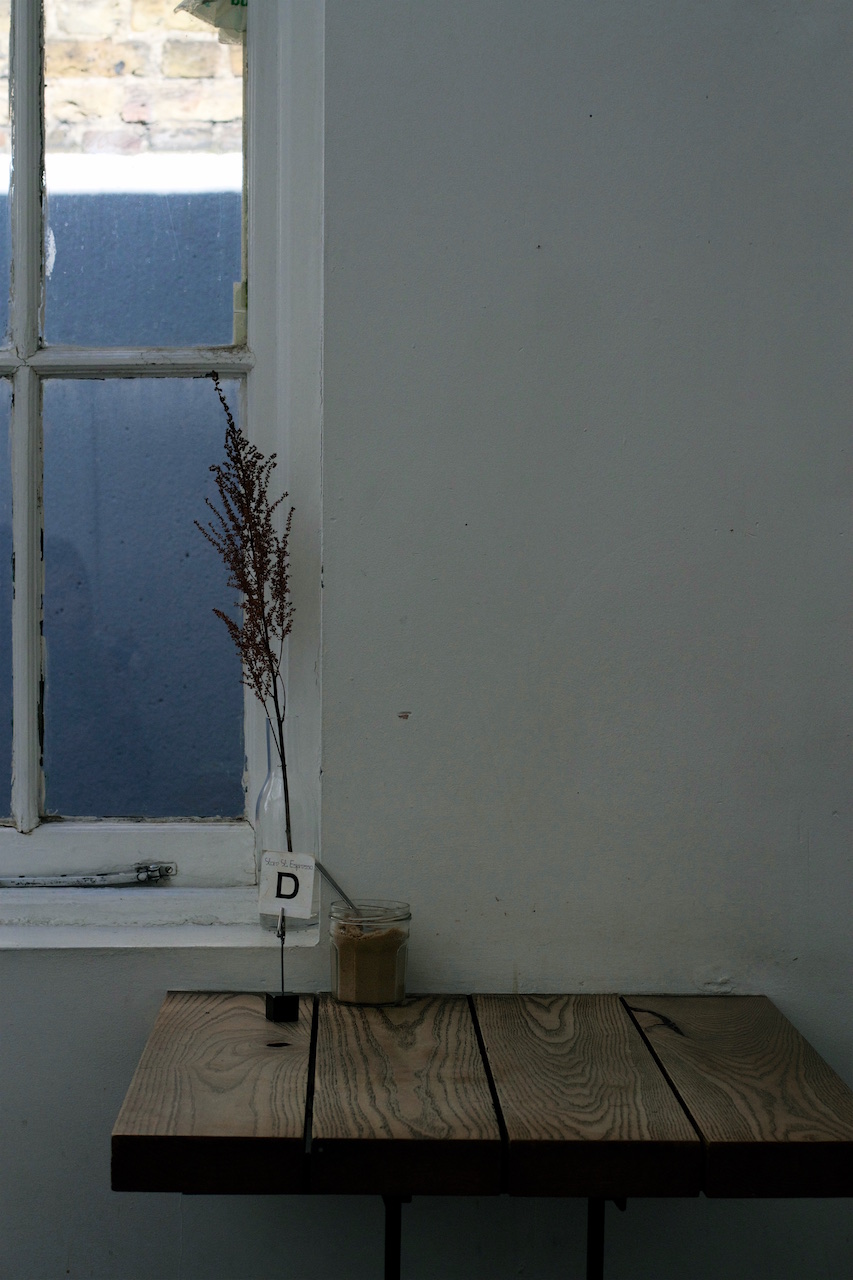
Store Street Espresso, Bloomsbury, London

Store Street Espresso, Bloomsbury, London · Lisa Stefan


Last week we went to London, where I got to see the Georgia O'Keeffe exhibition at Tate Modern - not a chance I was going to miss it! I needed a city trip before tuning into autumn. We dined at the Wild Food Cafe in Neal's Yard, walked in Covent Garden, Westminster and St. James's Park, and went to the Whole Foods Market on Kensington High Street, which always feels like our London food-home. The kids even asked, We are going to WFM, aren't we? And there was coffee. In the heart of Bloomsbury I had the best latte. I had promised a coffee-geeky friend to go to Store Street Espresso at 40 Store St (to be exact, it's part of the Fitzrovia district). It was a promise I happily fulfilled during our Bloomsbury/Fitzrovia stroll and the coffee shop lived up to my expectations.

Store Street Espresso, Bloomsbury, London · Lisa Hjalt
Store Street Espresso, Bloomsbury, London · Lisa Stefan


I was under the influence of the Bloomsbury group upon entering Store St Espresso. We had walked from Bloomsbury St into Gower St and at No. 10 I spotted the blue plaque of Lady Ottoline Morrell. I knew it was there, yet my heart skipped a beat. She wasn't exactly a member of the group but she was a patron of the arts and if you have read the diaries and letters of e.g. Virginia Woolf you will know Ottoline. This was my state of mind when I ordered my latte.

It was a very warm and sunny day in the city and we had done a lot of walking when I sat down and had my first sip; it was superb. Store St Espresso is my idea of a good café. It has that minimalist, rustic look with industrial touches. The atmosphere is ideal; it's an unpretentious café. The guests seem to mind their own business, on their laptops, phones or reading. I guess some would call this a place for hipsters but while I sat there I noticed all kinds of people with one thing in common, there to enjoy their coffee.


The location of Store St Espresso is great. The street is quiet, close to parks and The British Museum. I urge you to grab a coffee if you happen to be in the neighbourhood. Well, I urge you to eat in. There is a great window nook if you like people-watching and in fine weather you can sit outdoors.
Store Street Espresso, Bloomsbury, London · Lisa Stefan


I am not done with my trip on the blog but during our stay I certainly got my London fix. My mind is still wandering the streets of Bloomsbury, thinking of Virginia Woolf and her circle of friends. It's also lingering at the Tate, admiring O'Keeffe's paintings. Fortunately, the Scottish summer turned on its charm when we got home, enabling me to start writing this on the patio with a cup of coffee, and finishing on a chair in the front of the house, next to the hydrangeas, while admiring the sunset.

How I love August days like these!
Store Street Espresso, Bloomsbury, London · Lisa Stefan


Friday, 17 June 2016

№ 2 reading list: bookshelf styling

№ 2 reading list: bookshelf styling · Lisa Stefan


I have a bookshelf crush. Not my first. The July issue of Elle Decoration UK has a feature that has had me swooning just a little with my coffee, a home in LA that has so many right touches ('House on the Hills', photographed by Stephanie Bjelkstam). The open shelves in the living room display an uncluttered mix of books and decorative objects; books arranged both vertically and horizontally, adding visual interest. The shelves seem to breathe and echo the rug on the floor. Beautifully done. These days I'm reading a few books and soon I will be reviewing one of them on the blog: Decorative Textiles from Arab and Islamic Cultures: Selections from the Al Lulwa Collection. That Egyptian cotton appliqué to the left is a little preview.

My summer reading list is ready (I should probably call it my early summer reading list) and consists of plays and autobiographical writing. Recently I returned playwright Arthur Miller's memoir Timebends (wonderfully written, highly recommend it) to the library and picked up two of his plays. On the same day I was browsing online for works by Virginia Woolf and was lucky to find two used copies (vol. 3 of her diary has arrived and looks like new - love it). Here is my list:

1  All My Sons  by Arthur Miller
2  Death of a Salesman  by Arthur Miller
3  Off the Road: Twenty Years with Cassady, Kerouac and Ginsberg  by
Carolyn Cassady
4  The Diary of Virginia Woolf - Volume 3: 1925-1930  edited by Anne
Olivier Bell
5  The Letters of Virginia Woolf - Volume II: 1912-1922  edited by Nigel
Nicolson and Joanne Trautmann)
6  Testament of Youth: An Autobiographical Study of the Years 1900-1925 
by Vera Brittain

Some people would perhaps call this a bit heavy reading in summertime but I'm just not one of those readers who pick up a stack of quick-reads at the local bookshop. My children were making fun of me recently, saying that I read weird books. I'm trying to remember the exact phrase one of them used, 'English upper-class snob literature' or something like that. It cracked me up.


On a more personal note: It's the National Day of Iceland and my husband and I celebrate our 18th wedding anniversary. It's also Friday pizza day but he's abroad for work. The children and I are going for French cheese, baguette and grapes ... and chocolate. Have a wonderful weekend!

images by me | credit - top photo: Elle Decoration UK, July 2016, p. 116 · Stephanie Bjelkstam


Tuesday, 24 November 2015

Life … in Scotland

Books and coffee: Still life from Scotland · Lisa Stefan


I have been silent for a month and during this time I somehow managed to pack our things and move to Scotland. I will give you a moment to digest that … or perhaps read again. I am now living on the west coast, southwest of Glasgow, within walking distance from the town's centre and the beach. A real beach. On my first day I woke up to the sound of seagulls and immediately felt at home. I love the closeness to the sea; I was brought up with it in Reykjavik, Iceland. Our new home is an old, renovated house with soul: it has French windows, a high ceiling, original wooden doors and stairs, and both old and new floorboards. It speaks to me. I even have a garden with hydrangeas! During our no-Wi-Fi-yet period, I would sit in this corner in the dining room with my coffee and play solitaire, with actual playing cards, when taking a break from the unpacking. Very old school and calming.

These days life mainly consists of unpacking and arranging things, getting the children settled in their new schools and allowing the ear to get used to the Scottish accent. I thought it would be more difficult to understand the Scots but I was wrong. As I have only been living here for a short time, I cannot really make any general statements, but I have to say that I find it astonishing how one line on a map can change people. The Scottish are very different from the English in temperament; nature and climate must have something to do with it.


Monday, 21 September 2015

Lewis & Wood: The English Ethnic collection

Lewis & Wood - The English Ethnic collection · Lisa Stefan


In my last blog post I included samples from Lewis & Wood, an English textile and wallpaper company, and said I would share more later. They had sent me a stack of both fabric and wallpaper samples, some that had already attracted my attention online. The surprise were patterns they included in the package that hadn't caught my attention on their website but looked so incredibly beautiful when I was able to see the design details with my own eyes and feel the texture. I plan to share a few patterns later but today, with my latte, I'm focusing on the Womad and Bacchus patterns from their English Ethnic collection that arrived on the market last year. The collection, designed by artists Su Daybell, Flora Roberts and Melissa White, has been well received and featured in various magazines.

Lewis & Wood - The English Ethnic collection · Lisa Stefan


At Lewis & Wood they refer to Su Daybell as their wild card. She is the artist who created the arresting Womad pattern that has abstract flowers and motifs. The 100% linen fabric is available in two colours, burnish and celestial. To say that I have a major crush on the burnish one, in my top photo, would be an understatement. I honestly cannot stop admiring it. The colour palette of the Womad wallpaper consists of three beautiful hues of blue, brown and yellow, called stream, silt and sand.

Lewis & Wood - The English Ethnic collection · Lisa Stefan
In the foreground: Womad wallpaper samples in (from left) silt, sand and stream

For the collection, Daybell also designed the Force 9 pattern, suited for anyone unafraid of bold design. For those interested, a styling in the September 2014 issue of House & Garden shows it in a colour called gravel.

Lewis & Wood - The English Ethnic collection · Lisa Stefan
Bacchus wallpaper and fabric in mead by artist Melissa White

The Bacchus pattern by artist Melissa White for the English Ethnic collection is certainly on the market to stay. In the August 2015 issue of The World of Interiors its bluish colour - grigio - was selected in a round up of the best bold large-scale patterns on the market. The BBC Antiques Roadshow Magazine selected the pattern, in mead, as their winner of 'Best Printed Fabric 2014'. In their July 2014 issue they featured White at work in her studio where you can view her original artwork for the Bacchus design.

In a brochure from Lewis & Wood, introducing the collection and its designers, it says that Melissa White is well known for her Elizabethan wall paintings and painted cloths, that her "scholarly fascination with surface decoration and historical detail" give her designs a "real authority". The Bacchus pattern, 100% linen fabric and wallpaper, is available in three colours, mead, malt (greyish) and grigio. Not shown in this blog post is her other design for the collection, the Rococo wallpaper.

Lewis & Wood - The English Ethnic collection · Lisa Stefan


Decorative muralist Flora Roberts was the third artist chosen to design for the English Ethnic collection. You can view her stunning patterns Doves and Sika on the Lewis & Wood website.

Lewis & Wood - The English Ethnic collection · Lisa Stefan
In the left corner, a detail of the Bacchus fabric in grigio by artist Melissa White

Lewis & Wood was founded in 1993 by textile printer Stephen Lewis and interior designer Joanna Wood. In the beginning the operation was in a London basement but in 2008 the company moved to a large building in Woodchester Mill, in the Stroud Valleys in Gloucestershire. If you happen to be in London their showroom is on the first floor of the Design Centre East at Chelsea Harbour.